
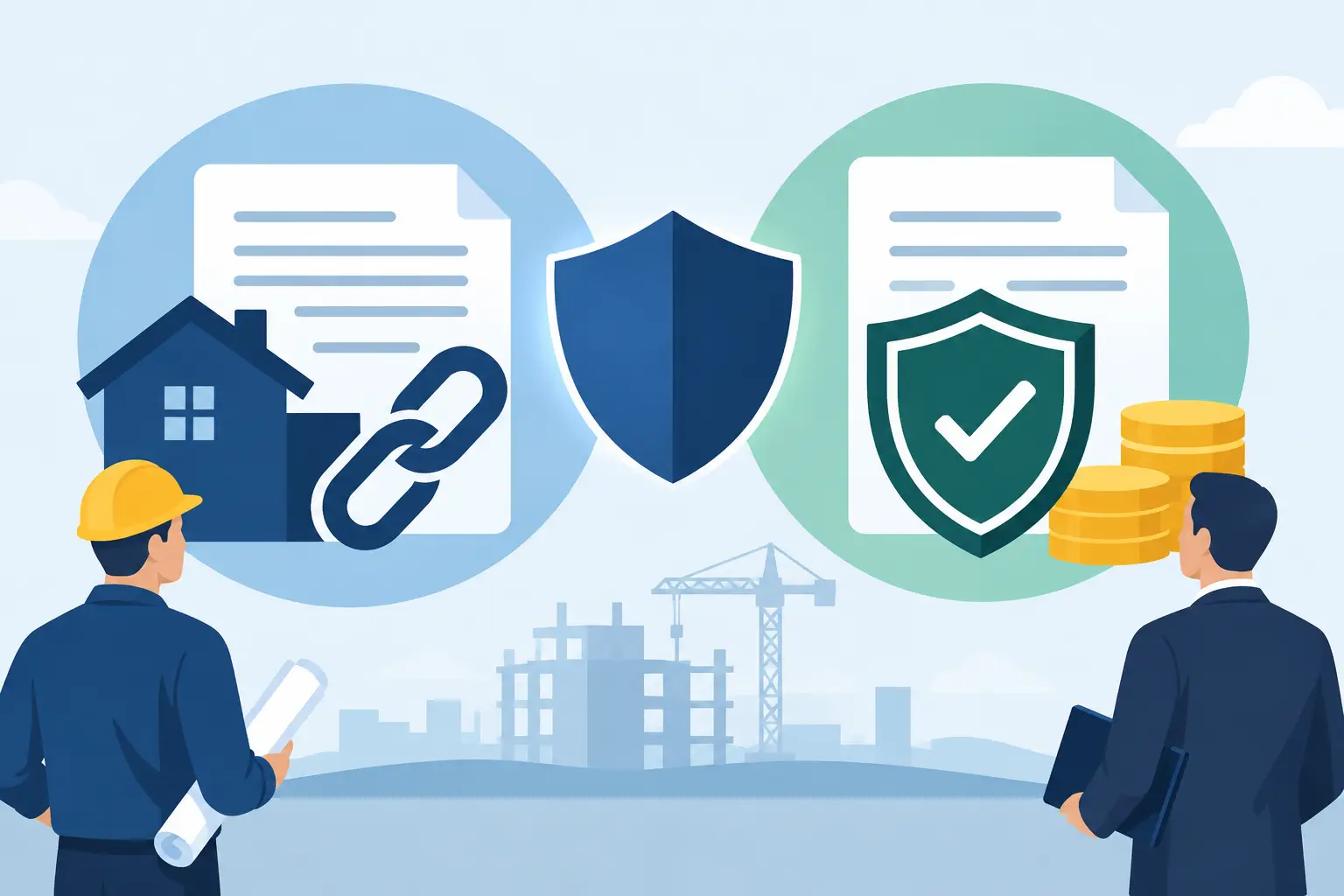
A job can be complete, the invoice can be overdue, and the owner may still be telling you payment is “being processed.” At that point, the question is not just how to collect. It is whether your payment rights attach to the property itself or to a payment bond. Understanding lien claim vs bond claim helps contractors choose the right paperwork before a deadline turns a collection problem into a lost claim.
Lien Claim vs Bond Claim: The Basic Difference
A lien claim is generally a claim against real property. When properly preserved and recorded under the law that applies to the project, a mechanic’s lien can give an unpaid contractor, subcontractor, supplier, or laborer a legal interest in the improved property. The property may not be sold, refinanced, or transferred cleanly until the lien issue is resolved.
A bond claim is generally a claim against a payment bond. Instead of looking to the owner’s property for payment, the claimant seeks payment from the surety company that issued the bond. The surety is the company backing the contractor’s payment obligation under the bond.
The distinction matters because the documents, parties, notice requirements, deadlines, and enforcement process can all be different. Filing a lien on a project that is covered by a public payment bond may not help at all. Missing bond notice requirements can create the same problem in reverse.
When a Lien Claim May Be the Right Path
Lien rights are most common on private construction projects, including commercial buildings, homes, tenant improvements, and privately owned developments. If labor, materials, equipment, or professional services improved privately owned real estate, a mechanic’s lien may be available under the applicable state law.
A lien claim puts pressure on the property interest. Owners have a strong reason to resolve valid lien claims because liens can interfere with financing, sales, draw payments, and final project closeout. That leverage is often what brings a stalled payment conversation back to the table.
Still, a lien is not automatic. States set detailed rules on who can claim a lien, what work qualifies, what notices are required, what information must appear in the claim, where it must be recorded, and when enforcement action must begin. On some projects, preliminary notices or notices to owners are required early in the job. On others, the claimant must serve notice within a short period after furnishing labor or materials.
A lien claim is usually the better fit when the project is private, no payment bond replaces lien rights, and the property information is accurate. Before preparing a claim, confirm the legal owner, parcel or property description, contracting parties, project address, unpaid balance, and the dates you first and last furnished work.
A lien is leverage, not instant payment
Recording a lien does not automatically put money in your account. It preserves a legal claim and can create serious pressure to resolve the debt. If the parties do not settle, the claimant may need to take additional action to enforce the lien within the required period.
That is why accuracy matters from the beginning. A wrong owner name, incorrect legal description, missing notice, or late recording can weaken an otherwise valid payment claim.
When a Bond Claim May Be the Right Path
Bond claims are especially common on public projects. In many states, public property cannot be subject to a mechanic’s lien in the same way private property can. Government buildings, roads, schools, municipal facilities, and other public works often require a payment bond to protect subcontractors and suppliers.
A payment bond may also appear on a private project. Large commercial owners, lenders, general contractors, and developers sometimes require a bonded general contractor. In those situations, the bond may provide a direct payment remedy for eligible claimants, and it may replace or limit lien rights depending on the project and state law.
For a bond claim, the key document is the payment bond itself. It identifies the principal, usually the bonded contractor; the obligee, often the project owner or public entity; the surety; the bond number; and the bond amount. It may also identify the project and contain language about who is covered.
Do not assume every bond is a payment bond. A performance bond protects the owner if the contractor fails to perform the work. A payment bond is intended to protect qualifying workers, subcontractors, and suppliers from nonpayment. Some projects have both, but they serve different purposes.
Bond claims often require written notice
Many bond statutes and bond forms require lower-tier subcontractors or suppliers to provide written notice to the general contractor, surety, owner, or public agency. The deadline may run from the claimant’s last furnishing date, not from the date an invoice became overdue.
The notice must often state the amount claimed, the party that hired the claimant, and the work or materials provided. Sending a vague demand to the wrong company is not the same as preserving a bond claim. Keep proof of delivery and a complete copy of every notice sent.
How to Tell Which Remedy Applies
Start with the project type. Is the property publicly owned or privately owned? Public ownership is a strong sign that a payment bond, rather than a property lien, may be the available remedy.
Next, ask whether a payment bond exists. The general contractor, project owner, public agency, lender, or procurement documents may have that information. Request a copy of the payment bond in writing as soon as payment trouble appears. You need the surety’s name, bond number, project details, and the bond language itself.
Then review your position on the job. A prime contractor, first-tier subcontractor, second-tier subcontractor, supplier, or labor provider may have different rights. The farther removed you are from the owner or bonded contractor, the more likely notice requirements become critical.
Finally, identify your last furnishing date. This is one of the most important dates in both lien and bond matters. It is generally the last date you provided meaningful labor, services, or materials under the contract. Going back later for a minor repair, inspection, or punch-list item may not extend the deadline. Do not rely on a late return visit to create more time.
The Practical Differences That Affect Your Next Move
A lien claim focuses on the property. The owner, title company, lender, and future buyer may all have an interest in getting it resolved. A bond claim focuses on the bond and the surety. The surety will review the claim, investigate the project records, and may request contracts, invoices, delivery tickets, proof of work, and payment history.
The best route is not always an either-or decision. On a private bonded project, a claimant may have potential lien rights and potential bond rights. Deadlines can run at the same time, and preserving one remedy may not preserve the other. If both may apply, treat them as separate tracks until you confirm the legal requirements.
There are trade-offs. A lien can create direct property-based leverage, but it requires precise property and recording information. A bond claim may avoid a property filing, but sureties expect organized documentation and strict compliance with the bond terms. In either case, waiting for “one more promise” from the customer can be expensive.
Documents to Gather Before Preparing a Claim
Good claim preparation begins with job records, not guesswork. Gather your signed contract or purchase order, approved change orders, invoices, account statements, delivery tickets, daily reports, timesheets, and communications about the unpaid balance.
You should also collect the project address, legal owner information if available, the party that hired you, the general contractor’s full legal name, and the dates you began and last furnished work. For a bond claim, add the payment bond, surety contact information, and any public contract or bid information.
Keep lien waivers organized as well. A signed waiver may affect what you can claim for a particular payment period. Review whether it was conditional or unconditional, the payment amount it covered, and the dates it covered. Never treat a waiver as routine paperwork when money is still outstanding.
Avoid the Most Common Filing Mistakes
The biggest mistake is waiting too long. Construction claim deadlines are often shorter than contractors expect, and they may run from work dates rather than invoice due dates. Put every key date in writing as soon as a payment problem develops.
The next mistake is using the wrong legal entity name. A project may be known by a trade name, but claims often need the correct owner, contractor, or surety name. Property research and bond verification can prevent a paperwork error that creates unnecessary disputes.
Another common problem is claiming an amount that does not match the records. Separate unpaid contract work from disputed extras, retainage, credits, back charges, and amounts already waived. Clear documentation makes a claim easier to evaluate and harder to dismiss.
First Choice Lien helps contractors reduce the administrative burden by preparing lien-related documentation and property research materials with straightforward pricing and fast turnaround. Because lien and bond requirements vary by state and project, contractors should also seek qualified legal guidance when a dispute involves complex facts, large amounts, or an approaching enforcement deadline.
When payment starts slipping, act while your records are fresh and your options are still open. Confirm the project type, find out whether a payment bond exists, protect the remedy that applies, and keep the paperwork moving before the deadline does.