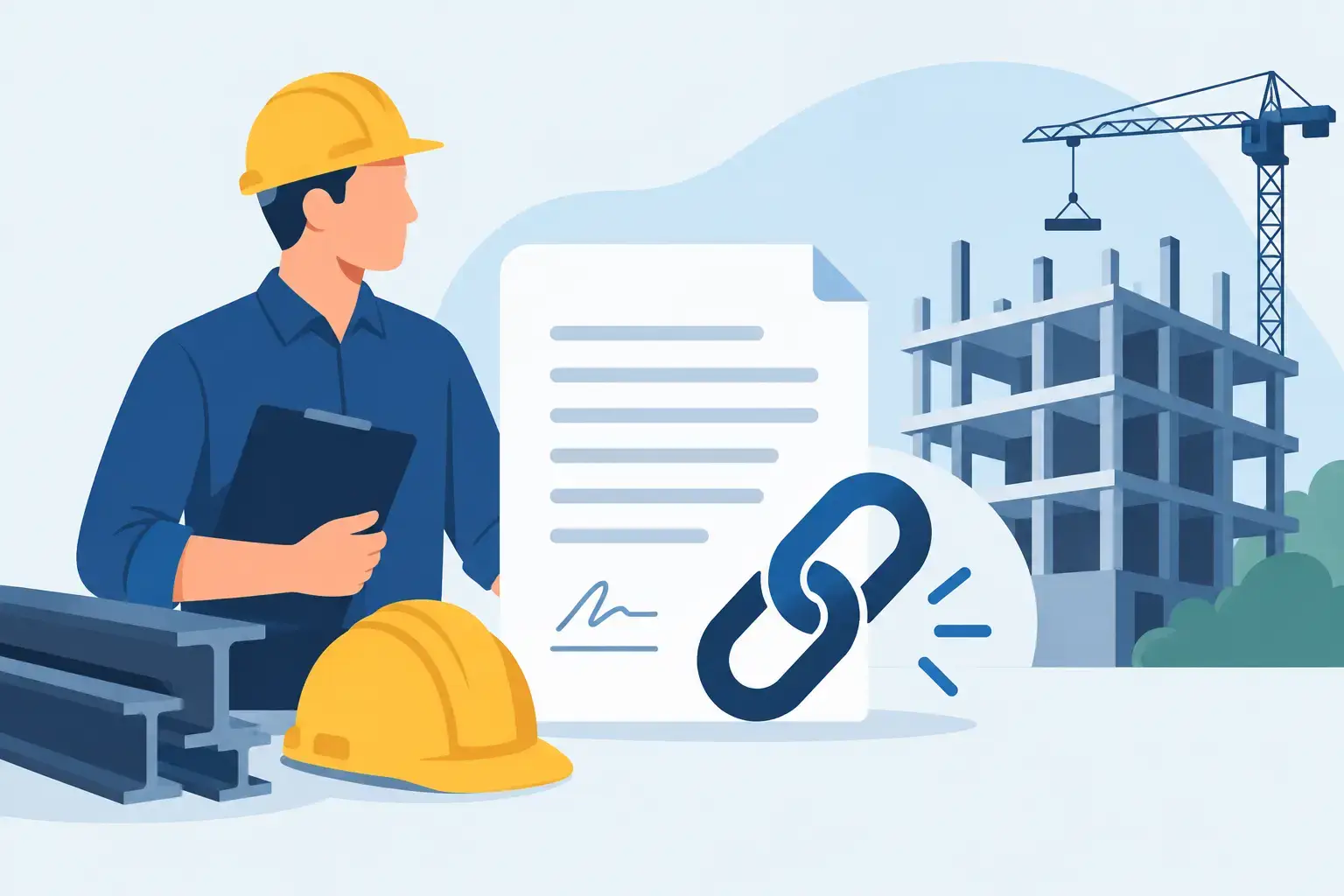

A payment promise does not protect your cash flow when the invoice remains unpaid. If you need to download a notice intent form, make sure you understand what the document is meant to do before you send it. A Notice of Intent to Lien can put the property owner, general contractor, or other responsible party on notice that you may pursue a mechanics lien if payment is not resolved.
For many contractors, that notice is enough to get an overdue invoice back on someone’s desk. It is also a deadline-sensitive document. The wrong form, the wrong recipient, or a late delivery can weaken your position when payment is already a problem.
What Is a Notice of Intent to Lien Form?
A Notice of Intent to Lien, sometimes called an NOI or intent-to-lien notice, is a written demand that warns of a possible mechanics lien filing. It typically identifies the property, the work performed, the amount claimed, and the party seeking payment. It gives the recipient a clear chance to address the balance before a lien is filed.
This is not the lien itself. Sending a notice of intent generally does not place a lien on the property, stop a sale, or guarantee payment. Its purpose is to create pressure, document your demand, and satisfy any pre-lien notice requirement that applies in your state or to your project.
That distinction matters. A contractor can send a strong notice and still lose lien rights if the actual lien deadline passes. Treat the notice as one step in your collection process, not the finish line.
When to Download a Notice Intent Form
The right time depends on the project, your contract, and state lien law. In practical terms, many contractors prepare a notice when invoices are overdue, follow-up calls have gone nowhere, and they need the customer to take the balance seriously.
Before you download a notice intent form, check whether your state requires a preliminary notice, a notice to owner, a notice of intent, or another document before lien filing. Some states require notices at the beginning of a project. Others require a notice shortly before filing a lien. Some have no notice-of-intent requirement at all.
Illinois contractors, for example, need to pay close attention to the type of project and their role in the contracting chain. Requirements can differ for general contractors, subcontractors, suppliers, residential work, and commercial work. Across the country, lien rules also vary based on whether the property is private, public, residential, commercial, owner-occupied, or government-owned.
If you are close to a filing deadline, do not wait for a customer to respond before confirming your next required step. A polite promise to pay does not extend a statutory deadline.
What a Complete Notice Should Include
A useful notice is specific enough that the recipient can identify the project, verify the claim, and understand what will happen if the account remains unpaid. Vague statements such as “you owe us for work completed” are easy to ignore and harder to support later.
Your completed form will commonly need the claimant’s legal business name and address, the customer or hiring party, the property owner when applicable, the project property address, a description of the labor or materials provided, the unpaid amount, and the date payment is expected. It should also state that you intend to preserve or file lien rights if the matter is not resolved.
Use the legal entity name shown on your contract, invoices, and business records. If your company operates under a trade name, do not assume that name alone is enough. The same care applies to the owner’s name and the property description. A street address may be helpful, but some filings require a more complete legal description or parcel information.
Keep the amount accurate. Do not inflate a claim to add frustration, future work, disputed extras, or penalty amounts you cannot support. A clean demand based on signed documents, approved change orders, delivery tickets, time records, and invoices is more credible than an overstated number.
Sending the Form Is Part of the Job
A properly completed notice can still fail to do its job if it is sent to the wrong party or delivered in the wrong way. State rules may require delivery to the owner, lender, general contractor, tenant, or another party. They may also specify certified mail, personal service, or another method.
Do not rely on an emailed PDF unless your state rules and your contract clearly allow it. Email can be useful as an additional business communication, but it may not prove legally required service. Keep copies of the completed notice, delivery receipts, tracking details, and every related message.
If you are dealing with a commercial project, verify the owner before sending anything. The company that hired you may not own the property. For larger sites, ownership can sit with a separate LLC, trust, or development entity. A property legal search can help confirm the correct party and reduce the risk of directing a notice to someone with no authority to resolve the claim.
A Fast Review Before You Send
Take a few minutes to compare the form against the job file. This is where preventable mistakes usually show up. Confirm these five items before sending:
- The project address and owner information match reliable property records.
- Your legal business name matches the contract and invoice records.
- The unpaid amount is supported by your documentation.
- The required recipients and delivery method are correct for your state and project type.
- Your lien filing deadline is tracked separately from the notice deadline.
That last point deserves extra attention. A notice may give the recipient 10, 15, or 30 days to respond, but your lien deadline might arrive sooner. Never let the demand period run out without checking the calendar.
Common Mistakes That Cost Contractors Time
The biggest mistake is assuming one free form works everywhere. A downloadable template can save time, but it must fit the state where the property is located. The job location controls the lien rules, not where your office is located or where your company is registered.
Another common mistake is waiting too long because the customer sounds cooperative. Contractors want to preserve relationships, especially with repeat builders and property managers. That is reasonable. Still, a professional notice is often the cleanest way to move the conversation from “we are working on it” to a payment decision.
Some contractors also confuse a notice of intent with a lien waiver. A waiver can release payment rights, while a notice of intent is used to protect or enforce those rights. Do not sign a waiver for unpaid work without reading what rights the document gives up and whether the payment has actually cleared.
Finally, avoid treating the notice as a threat you send only when emotions are high. A firm, factual notice is more effective than an angry one. State the project, the amount due, the deadline to resolve it, and the action you may take. Let the paperwork do the talking.
When You Need More Than a Free Form
A free form is a practical starting point when the facts are simple, the amount is clear, and you know the applicable requirements. It may not be enough when ownership is unclear, multiple tiers of contractors are involved, the project crosses state lines, or the deadline is tight.
That is where administrative support can save valuable time. First Choice Lien helps contractors handle property research and lien-related document preparation so they can spend less time sorting through records and more time running the job. Document preparation support does not replace legal advice, but it can reduce paperwork friction when the details need to be organized quickly.
If there is a major dispute over scope, defects, termination, retainage, or contract interpretation, speak with a qualified construction attorney in the state where the property is located. A lien filing is a powerful collection tool, but it is not the right answer to every payment dispute.
A notice of intent is most effective when it arrives early enough to matter, contains facts you can prove, and is followed by a clear decision if payment still does not come through. Protect the deadline first. The collection conversation can continue after that.