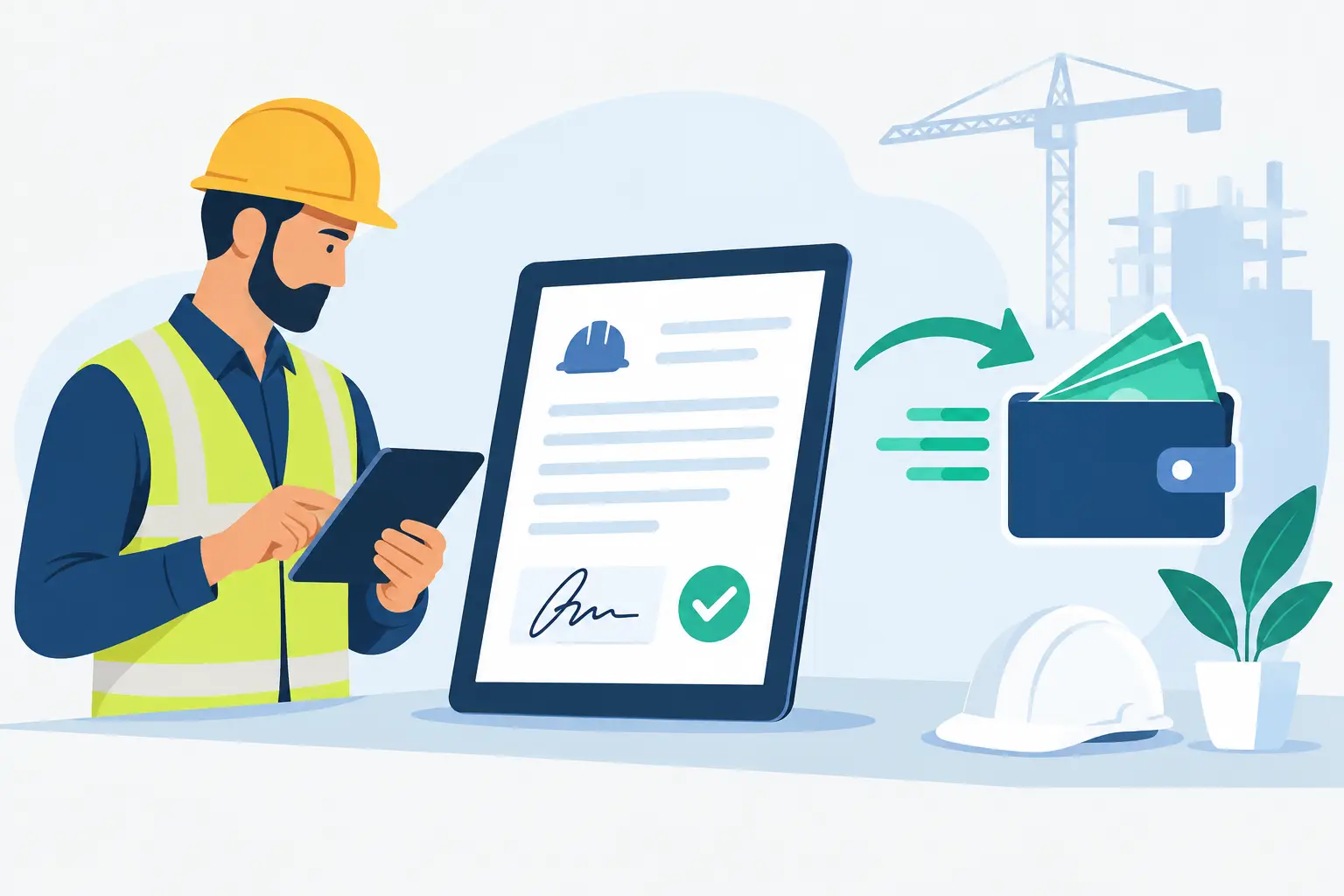
Getting handed a waiver at the end of a long week on the job can feel routine – until it wipes out rights you did not mean to give up. That is why a solid construction waiver form guide matters. If you are a contractor, subcontractor, or supplier, the form you sign can affect whether you still have leverage if payment gets delayed, reduced, or disputed.
Waivers are common in construction, but they are not all the same. Some only waive rights after money is actually received. Others can waive rights the moment you sign. The difference matters, especially when cash flow is tight and paperwork is moving faster than anyone would like.
What a construction waiver form actually does
A construction waiver form is a document that gives up certain lien rights tied to labor, materials, or services provided on a project. In most cases, it is exchanged during the payment process. Owners and general contractors often want one before releasing funds because they want proof that lower-tier parties will not later file a lien for the same amount.
That sounds simple enough, but the legal effect depends on the wording, the state, and the timing. Some waivers apply only to a specific progress payment. Others apply to the entire job. Some are conditional on payment clearing. Others are effective whether the check bounces or not. If you treat every waiver like a standard receipt, you can create a real collection problem later.
The four waiver types contractors see most often
Any practical construction waiver form guide should start here, because most confusion comes from mixing up these categories.
Conditional waiver on progress payment
This form says you waive lien rights for a certain amount only if payment is actually received. It is usually the safer option when you are signing before funds have cleared. If the payment does not arrive, the waiver typically does not become effective.
For contractors who are still waiting on a check, this format usually makes the most sense. It reflects the real deal – rights are waived in exchange for money, not promises.
Unconditional waiver on progress payment
This form gives up lien rights for a specific progress payment immediately, regardless of whether the funds actually clear. That makes it riskier. If you sign this before payment is secured, you may lose rights you still need.
There are situations where an unconditional waiver is appropriate, such as after confirmed receipt of funds. But timing is everything.
Conditional waiver on final payment
This is used near the end of the job when the final amount is being paid. Like the conditional progress version, it becomes effective only if payment is actually received. It is often a better fit when there is any doubt about timing, change orders, punch list issues, or retainage.
Unconditional waiver on final payment
This is the broadest and usually the riskiest form. It waives final lien rights right away, often for the whole project balance. If there is still any open issue about payment, offsets, disputed extras, or pending retainage, signing too early can cost you.
Why the wording matters more than the title
A form may be labeled as a waiver and release, but the real answer is in the actual language. Some forms waive lien rights only through a certain date. Others waive rights for labor and materials furnished to date, which can be broader than expected. Some include language releasing all claims, not just lien rights.
That last point is where contractors get burned. A waiver should not quietly become a full settlement agreement unless that is what you actually intend. If the form reaches beyond lien rights into delay claims, extras, disputed change orders, or contract damages, stop and read closely.
This is one of those areas where speed helps only if the paperwork is right. Fast paperwork is useful. Fast mistakes are expensive.
A practical construction waiver form guide for real job situations
On a clean, well-run project, waiver handling is straightforward. On a real project, there may be partial payments, revised schedules of values, pending change orders, and retention held back until closeout. That is where form choice matters.
If you are receiving a partial draw, the waiver should usually match that payment and no more. It should identify the project, payer, amount, and period covered with enough detail that nobody can stretch it later. If the payment is promised but not yet in hand, a conditional waiver is often the safer route.
If you are at final payment, be careful with broad language. Final waivers often come when everyone is tired and trying to close files. That is exactly when details get missed. Make sure any remaining retainage, disputed extras, or backcharges are addressed before signing away rights.
For subcontractors, this gets even more important because you are often signing forms prepared upstream. The general contractor may use one template across every job, but that does not mean the wording fits your situation.
Common waiver mistakes that create payment problems
The biggest mistake is signing an unconditional waiver before payment is confirmed. That sounds obvious, but it happens all the time when someone says the check is in process or accounting will send it later. If the waiver is already effective, your leverage may be gone.
Another problem is signing a waiver that covers more than the amount you were paid. A progress payment waiver should not accidentally release the full contract balance. The dates, amounts, and scope should line up with the actual transaction.
Contractors also run into trouble when waivers ignore pending change orders. If extra work was performed but not yet billed or approved, broad waiver language may create an argument that those rights were released too. The same issue comes up with retainage. If it is still being held, your waiver should not suggest it has been paid unless it actually has.
Then there is the paperwork problem. Missing job names, wrong legal descriptions, inconsistent customer names, and unsigned or improperly completed forms can slow payment instead of speeding it up. A waiver should reduce friction, not add another round of admin cleanup.
State rules can change the answer
Construction waiver law is not identical across the country. Some states have statutory forms or limits on how waivers can be used. Others allow more flexibility in contract language. That means a waiver form that worked on one project in one state may not be the right fit somewhere else.
For contractors working in Illinois or across multiple states, this is where extra caution pays off. The practical question is not just what you usually sign. It is whether the form matches the rules and payment facts for that specific project.
This is also why many contractors prefer document help instead of guessing. First Choice Lien, for example, focuses on making lien-related paperwork faster and easier for contractors who do not have time to sort through every form issue on their own.
How to review a waiver before you sign it
Start with the payment status. Ask whether the funds have actually been received and cleared. If not, an unconditional waiver deserves a hard second look.
Next, check the amount and date range. The waiver should clearly match the payment being made. If it says through the date hereof or through all work performed to date, make sure that does not sweep in unpaid extras or retainage.
Then review the release language itself. If it goes beyond lien rights and starts releasing claims, damages, or contract disputes, do not assume that is normal boilerplate. It may be broader than necessary.
Finally, confirm the project details. Names, addresses, and other identifying information should be accurate. Small clerical errors can create big arguments when payment problems show up later.
When a simple form is enough and when it is not
Sometimes a standard waiver is all you need. If the payment is clear, the amount is correct, and the wording is limited to the lien rights being exchanged, the process can be quick.
But if the job has payment disputes, incomplete change orders, multi-tier parties, or unusual closeout terms, it may not be a simple form issue anymore. That does not always mean a legal fight is coming. It just means paperwork should be handled carefully so you do not give up rights by accident.
Good waiver handling is really about staying in control of the payment process. The form should reflect what was actually paid, what is still open, and what rights you are intentionally giving up – nothing more. When the paperwork matches the deal, collections get cleaner, closeouts move faster, and you spend less time chasing down avoidable problems.
The safest habit is not treating waivers like routine signatures. Treat them like part of your payment protection system, because that is exactly what they are.