A document can be fully signed, dated, and sent over on time – and still get rejected because it needed a notary. That is the kind of avoidable problem that slows payment, delays closings, and creates extra work for contractors who already have enough on their plate. If you have ever asked when is notarization required, the short answer is this: not every legal document needs it, but the ones that do can cause real trouble if you skip it.
For contractors, subcontractors, and property owners, notarization usually matters when a document must prove that the signer is who they say they are and signed voluntarily. It adds a layer of verification. That does not automatically make a document more enforceable in every situation, but in many cases it is required for recording, compliance, or acceptance by the party receiving it.
When is notarization required on common construction documents?
In construction and payment disputes, notarization often comes up with lien waivers, sworn statements, affidavits, and documents tied to county recording. The key point is that notarization is usually not based on what feels formal. It is based on state law, local recording rules, lender requirements, title company standards, or contract terms.
Take lien waivers as an example. In some states and for some projects, a waiver can be valid without notarization if it is properly signed. In other situations, an owner, general contractor, lender, or title company may insist on a notarized final waiver before releasing payment. That does not always mean the law requires notarization, but it does mean the document may not be accepted without it.
Affidavits are more likely to require notarization because they are sworn statements. If a document includes language that the signer is swearing under oath that the contents are true, a notary is often part of making that statement legally usable. This is common with contractor affidavits, mechanic’s lien affidavits in some states, and statements used in support of payment or title clearance.
Documents intended for recording also often need notarization. Deeds are the most common example outside construction collections, but some lien-related filings or releases may also need to be notarized before a county recorder will accept them. If the document is headed to a recorder’s office, never assume a signature alone is enough.
The difference between legally required and practically required
This is where people get tripped up. A document might not strictly require notarization under state statute, yet still need to be notarized in the real world to move your payment forward.
For example, a property owner might refuse to issue a final check until they receive a notarized final release. A title company clearing a sale may require a notarized lien release to avoid any doubt about the signer. A lender funding a draw may want a notarized contractor’s affidavit. In each of those cases, notarization becomes practically required because the transaction stalls without it.
That is why the better question is not only when is notarization required by law, but also who is going to review, rely on, or record the document. The answer changes the risk.
Documents that often need notarization
For contractors and construction businesses, notarization most commonly shows up in a few categories. Mechanic’s lien filings may require notarization in some states, while others allow unsigned or unsworn formats that follow statutory language. Lien releases or satisfactions may need notarization before recording. Contractor affidavits, sworn statements, and statements of account are often notarized because they contain sworn facts. Some final release lien waivers are also requested in notarized form, especially when tied to final payment, title clearance, or lender review.
Outside the lien process, deeds, powers of attorney, and certain estate documents are frequently notarized. That matters if your payment issue overlaps with a property transfer, probate issue, or authority-to-sign question.
The safest move is to treat any sworn statement or recordable document as a document that deserves a notarization check before you sign and send it.
When notarization is usually not required
A lot of everyday business paperwork does not need a notary. Standard contracts, change orders, invoices, estimates, proposals, and many routine waivers can be valid with signatures alone. The same goes for many internal company documents.
That said, no-notary does not mean no-risk. If the form is the wrong one for your state, signed by the wrong party, or missing required statutory language, notarization will not fix it. A notary confirms identity and signature – not whether the document is legally correct.
That distinction matters. Contractors sometimes assume a notarized form is automatically stronger than an unnotarized one. It is not. A wrong document with a notary stamp is still the wrong document.
State law matters more than habit
Notarization rules are not one-size-fits-all across the United States. A form accepted in one state may be rejected in another. Some states have strict statutory forms for lien waivers. Some require verification for certain lien filings. Others focus more on timing, service, and content than on notarization.
Illinois contractors, for example, often deal with sworn statements and title-related requests where notarization becomes a practical part of the payment process, even when the issue starts as a basic collection problem. But the same job handled in another state may follow a different rule set.
That is why copying a form from a prior project can backfire. If the project location changes, the notarization requirement may change with it. The county’s recording office, the owner’s lender, and the project contract can all affect what is actually needed.
How to tell if your document needs a notary
Start with the document itself. If it includes a notary block, acknowledgment, jurat, or wording about being sworn before a notary, that is an obvious sign. Next, check whether the document is going to be recorded, submitted to a title company, or used to support a sworn factual claim. Those are common triggers.
Then look at the instructions tied to the form. If the statute, contract, owner packet, lender checklist, or county recording requirements call for notarization, treat that as mandatory unless you have clear reason not to. If you are dealing with a payment release, final waiver, or lien-related filing, it is worth verifying before you lose time sending the wrong version.
A practical rule works well here. If rejection would cost you money, delay funding, or weaken your payment position, confirm the notarization requirement first instead of guessing.
What a notary does – and does not do
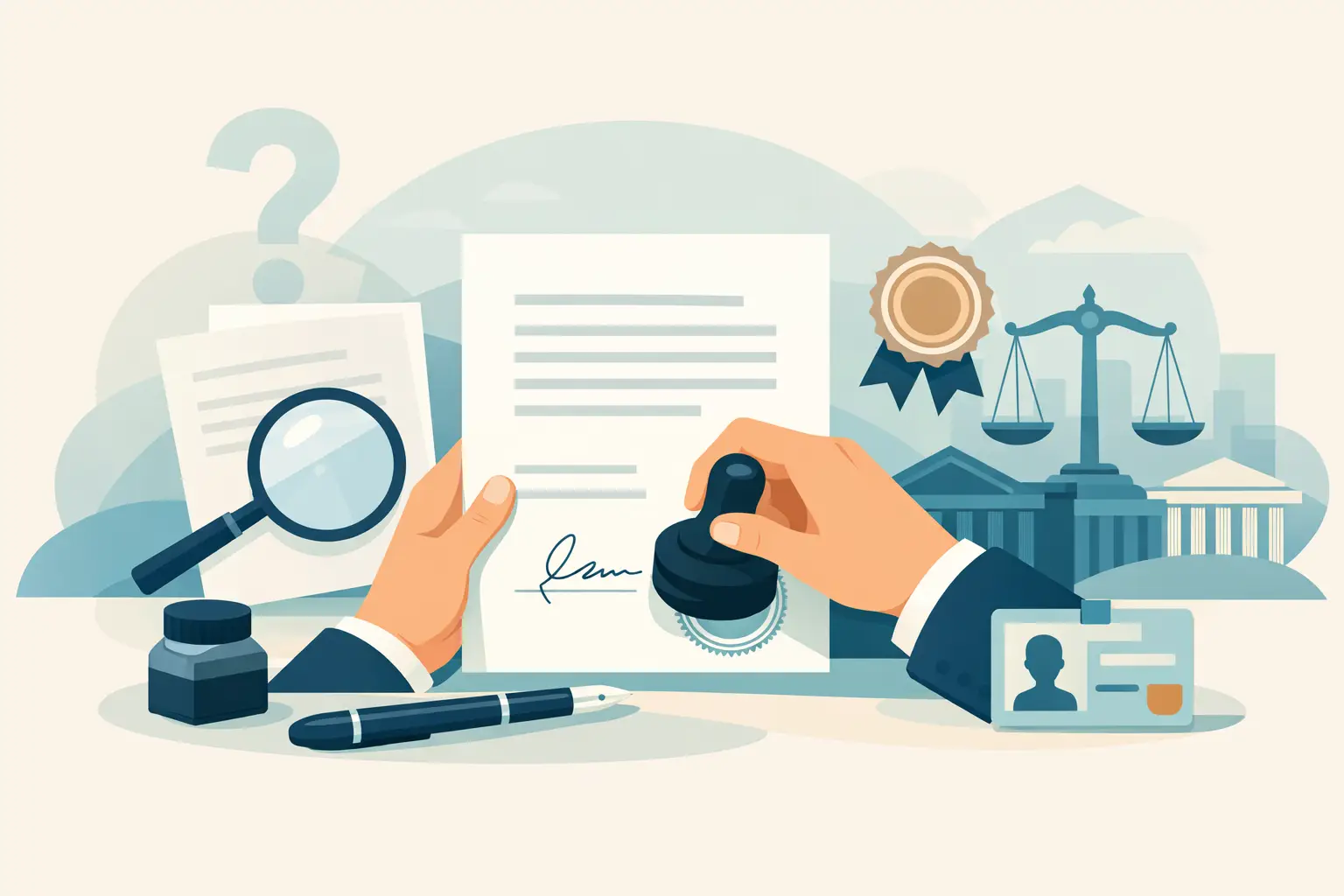
A notary verifies identity, witnesses the signature when required, and completes the notarial certificate. That helps prevent fraud and gives the receiving party more confidence that the document was properly signed.
What a notary does not do is review the document for legal accuracy, confirm deadlines, or decide whether your lien rights are protected. They are not a substitute for using the correct form or following state-specific timing rules. This is especially important in construction collections, where a missed deadline matters far more than a missing stamp.
Common mistakes contractors make with notarized documents
The biggest mistake is waiting until the last minute. A document may be due today, but if the signer is unavailable or the notary certificate is incomplete, you can miss a payment deadline or recording window.
Another common problem is signing before meeting with the notary when the document requires the signature to be witnessed. In some cases, that means doing the document over again. There is also the issue of using a generic form that has a notary section even though the real problem is that the form itself is not compliant for the state or purpose.
Contractors also run into trouble when they assume digital signatures and notarization are the same thing. They are not. Electronic notarization may be allowed in some jurisdictions, but it still has to meet the applicable rules.
A practical way to handle notarization without slowing the job down
The cleanest approach is to verify three things before the document goes out: whether the form is correct for the state and purpose, whether notarization is legally or practically required, and whether the receiving party has any special formatting or recording expectations.
If you are working through a lien waiver, final release, or affidavit tied to payment, get that answer early. It is far easier to line up notarization before a check release, closing, or filing deadline than after a rejection. This is one reason contractors use document support services like First Choice Lien – not because every form is complicated, but because the cost of a simple paperwork mistake can be much higher than the cost of getting it handled correctly.
When notarization is required, it is rarely the hardest part of the process. The harder part is knowing it was required before your payment, filing, or closing gets held up. A few minutes of verification can save days of delay, and that is usually time well spent.