A payment check is ready, but the owner, lender, or general contractor needs a signed waiver before releasing it. That is a common moment where an online waiver service can save a contractor hours of back-and-forth. Instead of hunting for a form, guessing at the right waiver language, and arranging a last-minute notarization, you can move the document forward with a clear process and a known cost.
For contractors and subcontractors, waiver paperwork is not a minor administrative task. It directly affects cash flow. A document with the wrong project details, payment amount, waiver type, or signature requirements can delay funds when you need them for payroll, materials, and the next job.
What an Online Waiver Service Actually Handles
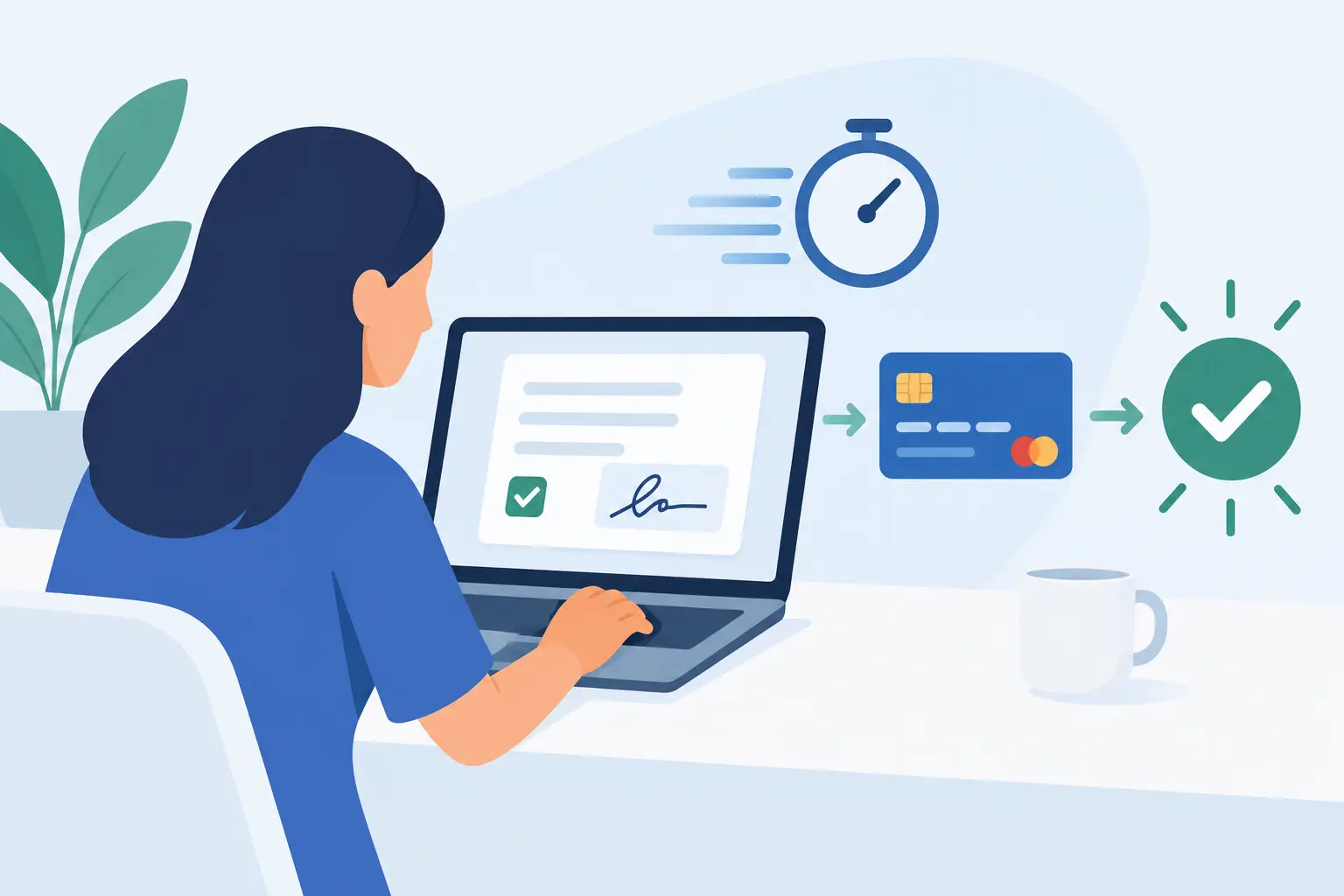
An online waiver service helps prepare lien waiver documents for construction payment transactions. Depending on the provider and the order, that may include collecting project information, preparing the requested waiver, coordinating notarization when needed, and delivering a completed document for your records or payment process.
The value is not simply getting a form. Many waiver forms look straightforward until you need to decide whether you are waiving rights through a specific date, through receipt of a progress payment, or only after final payment clears. The difference matters.
A practical service should make the ordering process simple: identify the property and parties, choose the document needed, provide the payment information, and receive clear instructions on what happens next. For busy trade professionals, that is often more useful than a generic template with no support behind it.
Why Waivers Can Hold Up Construction Payments
Lien waivers are frequently part of the payment controls used by owners, lenders, and general contractors. They want confirmation that payment recipients will not later assert lien rights for the amount or period covered by the waiver. That makes the document part of the normal payment chain, especially on larger or lender-funded projects.
The problem is that payment terms and waiver language do not always line up neatly. You may be asked for a final waiver when you are still waiting for funds to clear. You may receive a form that waives more than the current draw. Or the project information may be incomplete because the person requesting the waiver does not have the full legal property description.
Rushing through these details can create avoidable risk. Waiting too long can create an equally costly delay. The right approach is to use the correct document for the payment stage and make sure its details match the transaction.
Conditional and Unconditional Waivers Are Not Interchangeable
A conditional waiver generally becomes effective only when payment is actually received or cleared, based on the form and applicable state law. An unconditional waiver generally takes effect when signed, whether or not payment has cleared. That distinction is one reason contractors should read every waiver before signing it.
Progress waivers and final waivers also serve different purposes. A progress waiver usually addresses a partial payment through a stated date. A final waiver is typically used when the work and payment obligations are complete. Using a final waiver too early may waive rights you intended to preserve.
Requirements vary by state and project contract. An online document preparation service can help with the administrative process, but it is not a substitute for legal advice when there is a dispute, unusual waiver language, a significant unpaid balance, or uncertainty about your rights.
When an Online Waiver Service Makes the Most Sense
Contractors use waiver services when speed matters but they do not want to sacrifice organization. It can be a good fit when a general contractor needs a notarized final waiver before releasing final payment, when you have several project documents to manage, or when your office team is stretched thin.
It is also useful when the property details are unclear. A property legal search can help confirm ownership information or legal descriptions needed for lien-related paperwork. This is particularly helpful when project addresses are incomplete, multiple parcels are involved, or the party requesting the waiver needs more than a street address.
First Choice Lien supports contractors who need this kind of practical paperwork help without adding another complicated task to the job. The focus should be straightforward: clear pricing, a defined turnaround, and documents prepared from the information you provide.
What to Have Ready Before You Order
The fastest orders are the ones with complete information at the start. Before using an online waiver service, gather the key facts tied to the payment and property. You should have the project address, the hiring party’s name, your company name as it appears in the contract, and the amount being paid.
You will also want the payment period or through-date the waiver should cover. For a final waiver, confirm whether the amount represents full and final payment under your contract. If you are a subcontractor, keep the relevant subcontract and any prior waiver records nearby so you can verify that the document does not duplicate or conflict with a previous release.
If notarization is required, make sure the authorized signer is available. A signed document is not useful if it is signed by someone without authority to bind the company or if the notary requirements are missed.
A Better Workflow for Waiver Requests
An online process works best when it follows the same disciplined approach you use for change orders and invoices. Treat each waiver as a payment document, not a formality.
Start by matching the requested waiver to the payment you expect. Check the project name, property address, owner or general contractor, your legal business name, and the payment amount. Then verify whether the waiver is conditional or unconditional and whether it is a progress or final waiver.
After the document is prepared, review it before signing. Pay close attention to broad wording such as “all claims” or “through final completion.” Those terms may be appropriate in some cases and inappropriate in others. If the wording does not match the payment arrangement, stop and get clarification before you sign.
Once the waiver is signed and notarized, keep a copy with the related invoice, payment confirmation, contract, and prior waivers. A simple project folder, digital or paper, makes it much easier to respond if a payment question comes up months later.
Four Questions to Ask Before Choosing a Service
Not all online providers offer the same level of support. Before placing an order, get clear answers to these four questions:
- What type of waiver is being prepared, and is it appropriate for the payment stage?
- Is notarization included, available as an add-on, or your responsibility?
- What information is required from you, including property details and authorized signer information?
- What is the expected turnaround, and are there any additional fees for rush handling or research?
Upfront answers matter. A low advertised price is not helpful if the service does not include the step that is holding up your payment. Likewise, a fast turnaround only helps if you submit complete and accurate details.
Avoid Common Waiver Mistakes
The most common mistake is signing an unconditional waiver before payment is secure. Another is using a final waiver for a partial draw because the form was sent by the general contractor and nobody questioned it. Contractors also run into trouble when the waiver identifies the wrong entity, has the wrong property, or covers the wrong date range.
There is also a recordkeeping issue. If you cannot quickly show what you waived, when you waived it, and what payment it matched, resolving a later disagreement becomes harder. Keep signed copies and payment proof together for every project.
For Illinois contractors and contractors working elsewhere in the United States, lien and waiver rules can differ substantially by jurisdiction. State-specific forms, statutory language, notice requirements, and signing rules may apply. Do not assume a form used on one project or in one state is automatically appropriate for another.
Speed Should Not Mean Guesswork
An online waiver service is most valuable when it removes administrative friction without asking you to guess at critical details. You should know what document you are requesting, what it covers, what it costs, and when you can expect it back.
That clarity gives contractors more control over the payment process. Instead of losing time to paperwork at the end of a draw or final billing cycle, you can respond quickly with organized documentation and stay focused on the work that keeps your business moving. When a waiver is requested, treat it as part of getting paid – because it usually is.