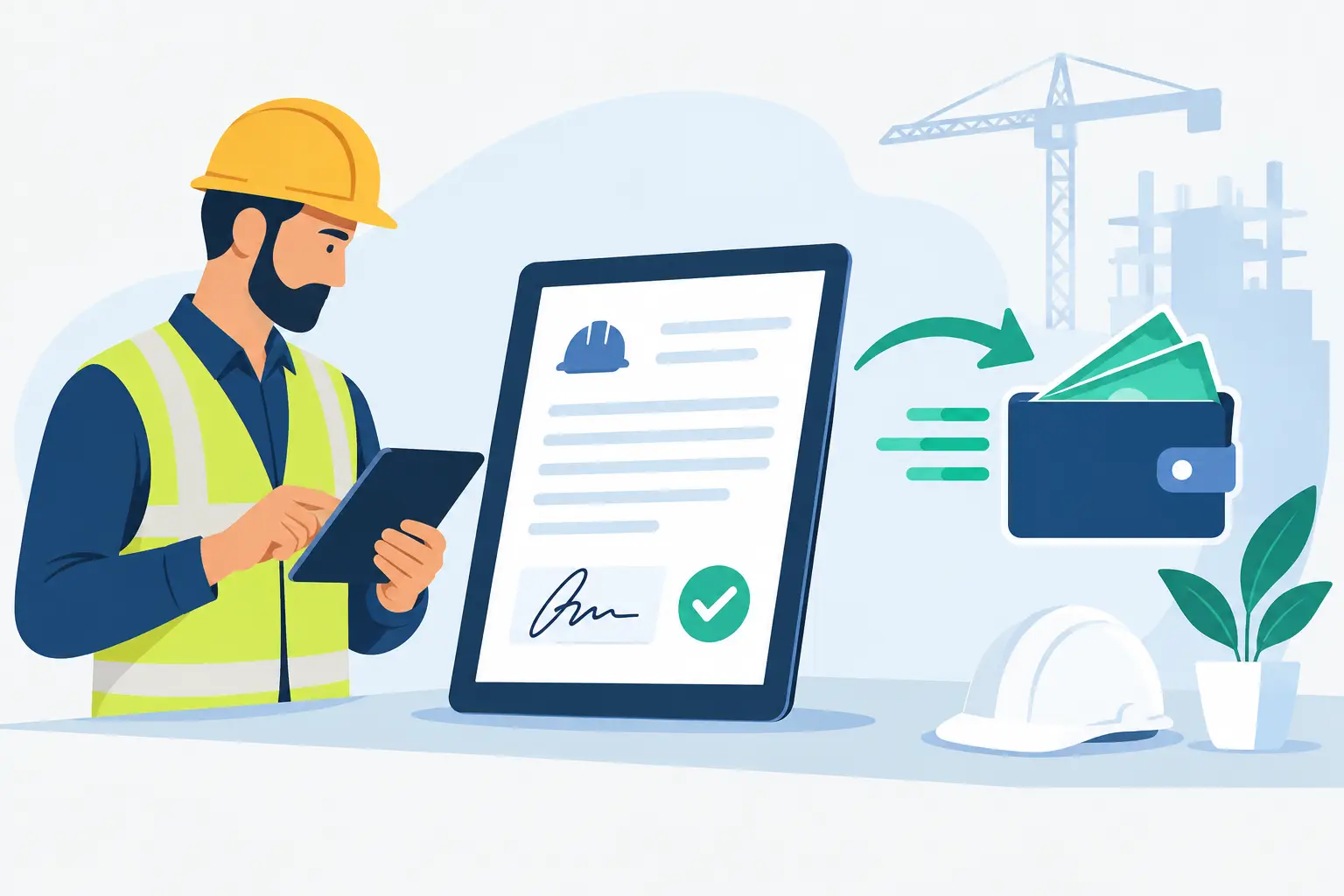
A payment application is on the desk, the owner needs a waiver today, and the check is still pending. That is the moment New York lien waiver rules matter most. A signature meant to move one payment forward can create a real collection problem if the document releases more than the amount received, covers the wrong period, or waives rights before money is available.
For New York contractors, subcontractors, and suppliers, a lien waiver should be treated as a payment-control document, not routine paperwork. The right form, timing, and wording depend on whether payment is partial or final, whether funds have cleared, and whether a mechanics lien has already been filed.
What New York Lien Waiver Rules Actually Protect
New York generally does not use one mandatory statewide lien waiver form. Owners, general contractors, lenders, and title companies may each provide their own forms. That makes it especially important to read the release language instead of assuming a document labeled “waiver” is limited to the current payment.
New York Lien Law Section 34 provides meaningful protection against advance waivers. As a general rule, a construction contract provision requiring a contractor, subcontractor, or supplier to waive the right to file or enforce a lien before performing work or furnishing materials is void as against public policy. Put plainly, an upstream party cannot take away lien rights at the start of the job simply by inserting a waiver clause into the contract.
That protection does not mean every waiver presented during the project is invalid. A contractor can still release lien rights tied to work already performed, especially in exchange for a specific payment. The practical question is whether the release fairly matches the payment and the work period it identifies.
A waiver also does not replace every other notice or deadline that may apply. New York lien rights are deadline-driven, and the rules can differ for private projects, public improvements, residential work, and work involving public entities. Keep the waiver process separate from tracking lien filing deadlines.
Match the Waiver to the Payment Status
The safest waiver is one that says exactly what it is releasing and when it becomes effective. For progress payments, contractors commonly use a conditional partial waiver. It identifies the amount being paid and states that the waiver becomes effective only when the payment is actually received and clears.
That condition matters. A check can be stopped, returned, or delayed. An unconditional waiver signed before funds clear may give the payer an argument that lien rights have already been released, even if the money never arrives. It may be harder to unwind that mistake than to insist on conditional wording up front.
Once payment has cleared, an unconditional partial waiver may be appropriate. It should be limited to the amount received and the work, materials, and time period covered by that payment. It should not accidentally release retainage, approved but unpaid change orders, disputed extras, or future work.
Final waivers require more caution. A final waiver should generally be signed only after final payment, including retainage and any agreed change-order balance, has been received in full. If there is a remaining dispute, the document should clearly reserve that amount and the related claim rather than use broad language saying all obligations have been satisfied.
Some owners and lenders prefer their own unconditional forms. That does not make early signing a good business decision. If the form cannot be revised, ask whether a conditional waiver will be accepted until the funds clear. A short delay is usually less expensive than giving up payment leverage.
Watch for Language That Goes Beyond Lien Rights
A lien waiver may look simple at the top and become much broader in the fine print. Many forms combine a waiver of lien rights with a release of claims. Those are not the same thing.
A narrow lien waiver releases the right to claim a lien for a stated amount or period. A broad release may also waive contract claims, delay damages, disruption costs, pending change orders, claims against a payment bond, or claims connected to work that was not part of the current payment. That may be acceptable in a fully resolved final settlement, but it is a major trade-off on an active project.
Before signing, check the project name and address, owner, hiring party, payment amount, through-date, and whether the document is partial or final. Then read the release paragraph for phrases such as “all claims,” “known or unknown,” “through the date hereof,” or “including all extras.” If those words do not match the deal, ask for a correction or add a clear written reservation where appropriate.
Do not rely on a verbal promise that an excluded change order will be handled later. If the waiver says it is released, the written document may control the dispute.
A Waiver Is Not the Same as Releasing a Filed Lien
This distinction causes avoidable title and payment delays. A lien waiver is often exchanged with a payment application or check. It may show that the signer will not assert a lien for the covered amount. But if a mechanics lien has already been filed, a simple waiver may not remove that lien from the public record.
To clear a filed New York mechanics lien, the lien generally must be discharged using the proper process and filed with the office where the lien record is held. A discharge or satisfaction document needs to meet filing requirements, including acknowledgment requirements that often call for notarization. The owner, lender, or title company may also have specific requirements before closing or releasing funds.
Do not sign a broad final release expecting it to automatically clear the recorded lien. Confirm what document is needed, who must sign it, where it must be filed, and who is responsible for filing it. Document preparation and recording are separate tasks.
A Practical Review Process Before You Sign
A consistent process helps prevent waiver mistakes when jobs and payments are moving quickly. Before returning any lien waiver, use this five-step check:
- Confirm the exact payment amount, payment method, and whether funds are cleared.
- Match the waiver’s through-date to the work actually included in that payment.
- Identify unpaid retainage, change orders, materials, extras, or disputed balances that must be reserved.
- Check whether the document waives only lien rights or also releases contract, bond, and other claims.
- Keep a signed copy with the payment record, invoice, application for payment, and any written exclusions.
For a company with several projects, assign one person to track waivers and lien deadlines. Field crews should not be expected to interpret release language while they are trying to keep a job moving. A basic payment log showing invoice number, waiver type, covered dates, amount, and payment-clear date can save hours when a dispute develops.
Also make sure the person signing has authority to bind the business. That issue can become significant for corporations, LLCs, partnerships, and subcontractors signing documents on behalf of another entity. If notarization is requested, verify that names, titles, and entity information are consistent before the appointment.
When to Get Help With the Paperwork
A straightforward partial waiver for a cleared progress payment may be manageable in-house. The risk increases when a form includes a full release, a final payment, a filed lien, a title closing, a payment bond, or a disputed change order. At that point, careful document review can protect far more than the cost of getting the paperwork right.
First Choice Lien can help contractors reduce the administrative burden of lien-related document preparation and notarized release paperwork. For legal advice about disputed rights, settlement terms, or the effect of a broad release, speak with a qualified New York construction attorney.
The best time to question a waiver is before it is signed. Slow the process down long enough to match the release to the money actually received, preserve what remains unpaid, and keep your payment rights working for the job you completed.