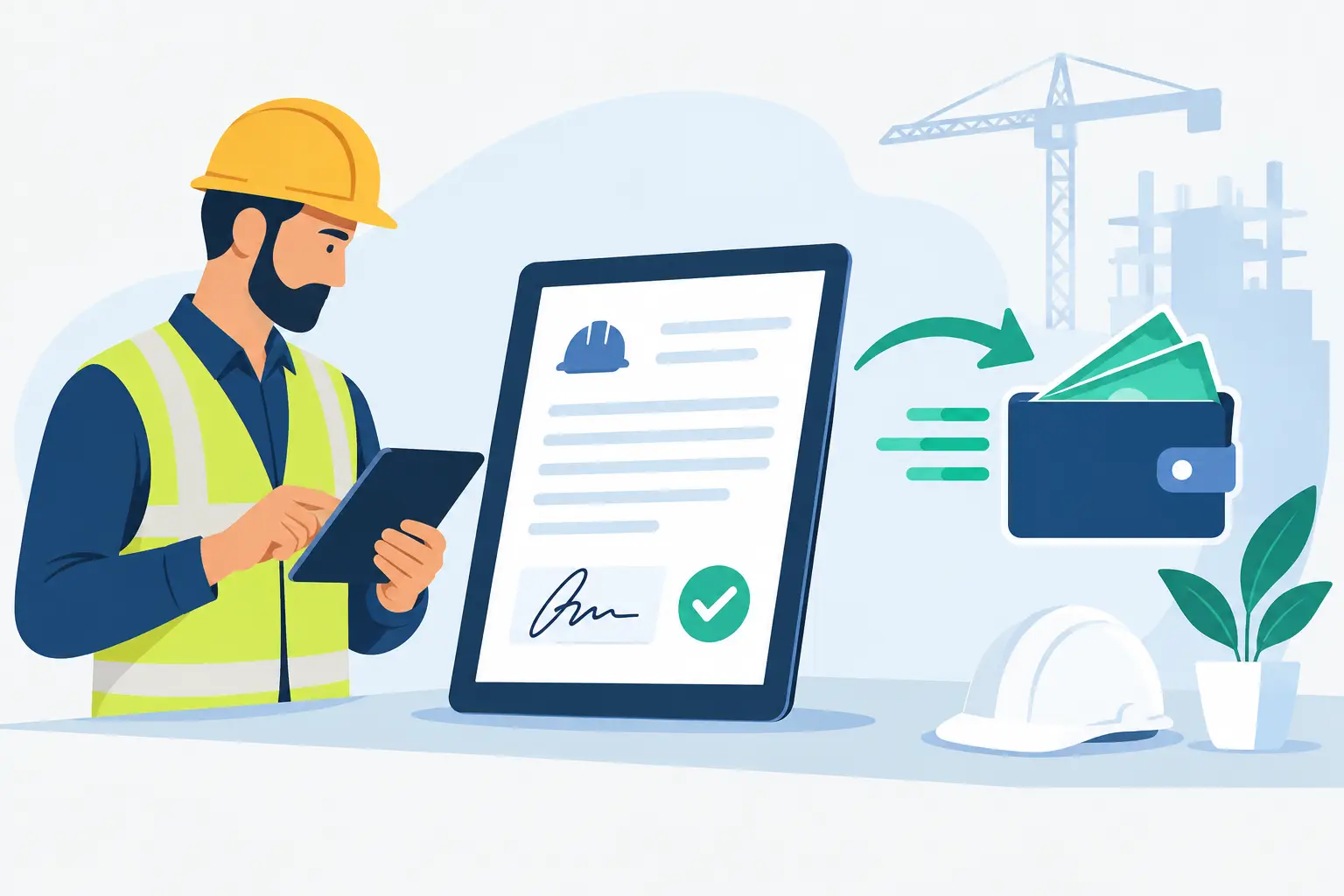

A missed waiver can slow down payment just as fast as a missed invoice. That is why a contractor waiver form template matters on real jobs – not as extra paperwork, but as a practical tool that helps confirm what was paid, what rights are being waived, and when that waiver actually takes effect.
For contractors, subcontractors, and suppliers, the problem is rarely just getting a form. The real issue is using the right waiver at the right time with the right project details. A form that is too broad, signed too early, or filled out carelessly can create confusion you do not want when cash flow is already tight.
What a contractor waiver form template actually does
A contractor waiver form template is a preformatted document used to waive certain lien rights in exchange for payment, whether that payment is expected, received in part, or received in full. It gives both sides a written record of the payment status tied to a project, property, and billing period.
That sounds simple, but the details matter. A waiver is not just a receipt. It can affect your right to file a mechanics lien if payment problems come up later. If the wording says you are giving up rights through a certain date, then that date matters. If the form says the waiver is effective only after funds clear, that condition matters too.
Used correctly, a waiver helps reduce back-and-forth between owners, generals, and subs. Used carelessly, it can waive more than you intended.
Why contractors use waiver templates in the first place
Most contractors are not looking for more admin work. They use templates because every project has moving parts, and payment paperwork needs to be consistent. A good template saves time, keeps project details organized, and reduces the chance of sending a waiver with missing names, wrong dates, or vague payment language.
It also helps when you are dealing with repeat billing cycles. Progress payments, partial releases, and final payment requests can all require different wording. Starting from scratch every time increases the odds of errors. Starting with a clear template makes the process faster and easier to check before signing.
That said, a template is only a starting point. Construction law varies by state, and waiver rules are not identical everywhere. In some states, the form language is tightly controlled. In others, there is more flexibility, which can create room for sloppy drafting. That is where contractors need to slow down and make sure the form fits the situation.
The main waiver types contractors should know
When people search for a contractor waiver form template, they usually need one of four common waiver categories. The difference comes down to two things – whether payment is conditional or unconditional, and whether the waiver is partial or final.
A conditional waiver is generally used when payment has been promised or a check has been issued but funds have not fully cleared yet. The waiver becomes effective only if the payment condition is met. For many contractors, this is the safer option before money is actually in hand.
An unconditional waiver is usually used after payment has been received and cleared. It confirms that lien rights covered by the document are waived without further conditions. This can be efficient, but it is also where contractors get into trouble if they sign too early.
A partial waiver applies to a progress payment or a specific amount through a certain date. A final waiver applies when the account is fully paid and the project balance is resolved. The words partial and final should never be treated as interchangeable. If you are still owed change-order money, retainage, or disputed extras, a final waiver may be the wrong form.
What to include in a contractor waiver form template
A useful template should identify the parties clearly and tie the waiver to a specific project. At a minimum, the form should include the contractor or claimant name, the hiring party name, project address, owner information if relevant, payment amount, invoice or draw reference, and the date range covered by the waiver.
The waiver language should also make clear whether it is conditional or unconditional and whether it is partial or final. If the waiver only covers labor and materials furnished through a certain date, that should be stated plainly. If there are exceptions, such as pending retainage, disputed change orders, or approved but unpaid extras, those should be identified instead of assumed.
Signatures matter, and so does authority. The person signing should be someone authorized to bind the business. On some projects, notarization may be requested or preferred, even if not always required. The more money at stake, the less room there is for informal shortcuts.
Where templates go wrong
The biggest mistake is signing an unconditional waiver before payment is truly collected. A check in hand is not always the same as cleared funds. If payment later bounces or gets reversed, your waiver may already have created problems.
Another common issue is using broad language that wipes out more rights than the current payment justifies. For example, a contractor expecting a waiver through one billing period may accidentally sign a form that releases all claims on the project. That kind of mismatch can be expensive.
There is also the issue of incomplete project details. Wrong legal names, missing addresses, unclear payment dates, or handwritten edits that no one initials can all lead to disputes later. A waiver should answer questions, not create new ones.
Then there is the state law issue. A generic online form may look fine but still fail to match the requirements or standard practices in the state where the project is located. For contractors working across multiple states, that is not a small detail.
How to use a contractor waiver form template the right way
Start by matching the template to the payment stage. If you are waiting on funds, use a conditional form when appropriate. If final funds have fully cleared and no balance remains, a final unconditional form may be the proper fit. The right choice depends on what has actually happened, not what you expect to happen.
Next, fill in every project detail carefully. Use full legal business names, not nicknames or shorthand. Confirm the job address, customer name, and payment amount against your invoice and contract records. If the waiver only covers work through a specific date, state that date clearly.
Review the release language before signing. If the form includes broad claim-release wording beyond lien rights, read it closely. Some documents go further than a standard waiver and may attempt to waive additional claims. If the language does not match the payment you are receiving, do not treat it like routine paperwork.
Keep a clean record once the document is signed. Save the executed waiver with the related invoice, proof of payment, and any supporting correspondence. If a dispute comes up later, organized records can save time and protect your position.
When a free template is enough and when it is not
A basic template can be enough when the project is straightforward, the payment status is clear, and the waiver language fits the state and payment stage. For experienced contractors with reliable internal admin processes, that may be all they need for routine jobs.
But there are cases where a template alone is not enough. Multi-party projects, disputed balances, unusual contract terms, and state-specific compliance questions all raise the stakes. The same goes for final waivers tied to large balances or pressure from an owner or general contractor to sign quickly.
In those situations, practical document support can be worth it. Companies like First Choice Lien help contractors cut through the paperwork, handle document preparation tasks, and keep the process moving without turning a simple waiver into a time drain.
Choosing a template that helps instead of hurts
The best template is not the longest one or the most formal-looking one. It is the one that clearly matches the payment situation, uses accurate project information, and avoids language that creates unnecessary risk.
If you are comparing templates, look for clarity first. Can you tell right away whether it is conditional or unconditional? Does it define whether the waiver is partial or final? Is there space to note exceptions or unpaid amounts? If not, the form may be too vague for real job use.
Contractors do not need more complexity. They need forms that support faster billing, cleaner payment records, and fewer disputes. A well-built waiver template does exactly that, but only when it is used with care.
The smart move is simple: treat every waiver like it matters, because it does. A few extra minutes before signing can protect weeks of work after the job is done.