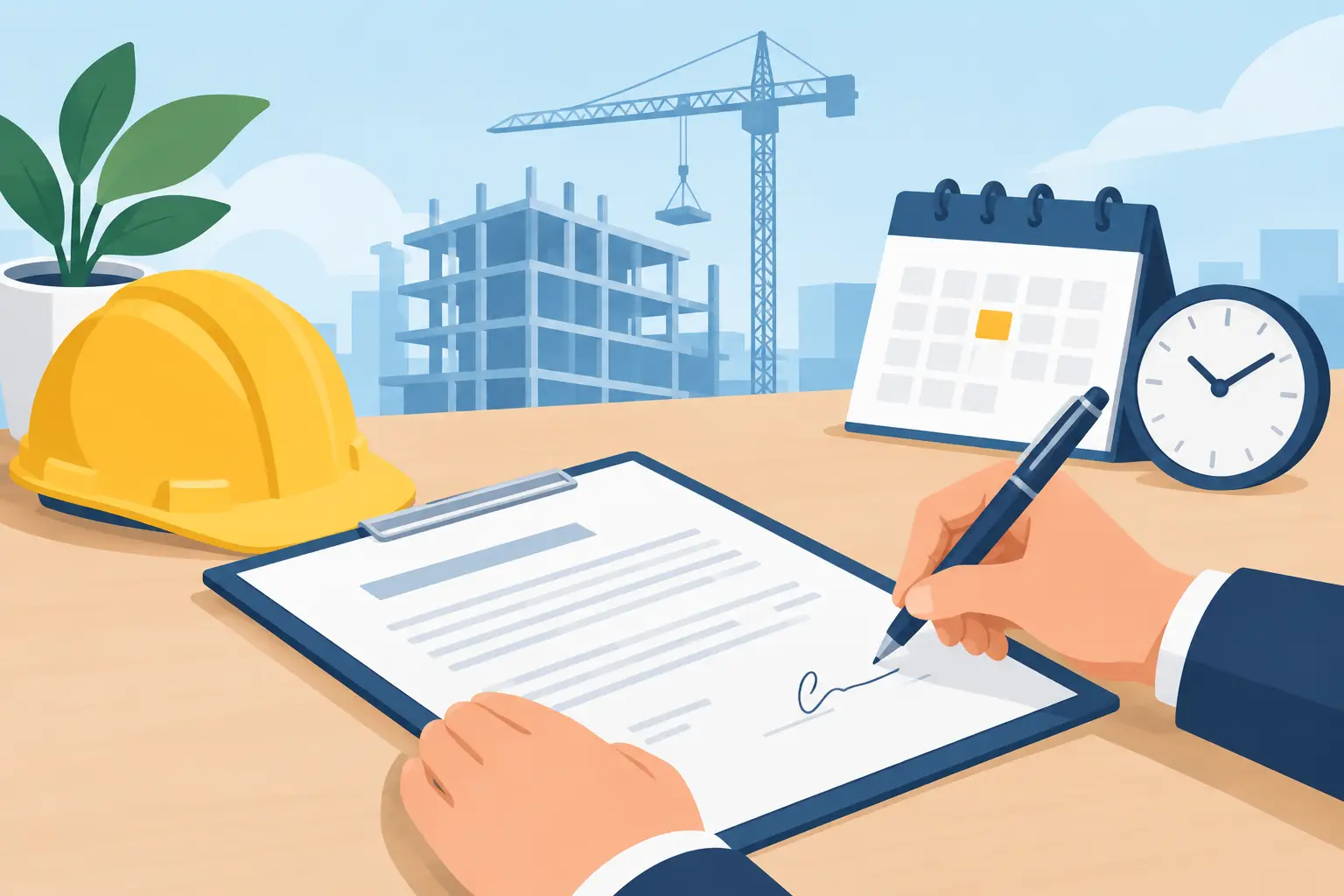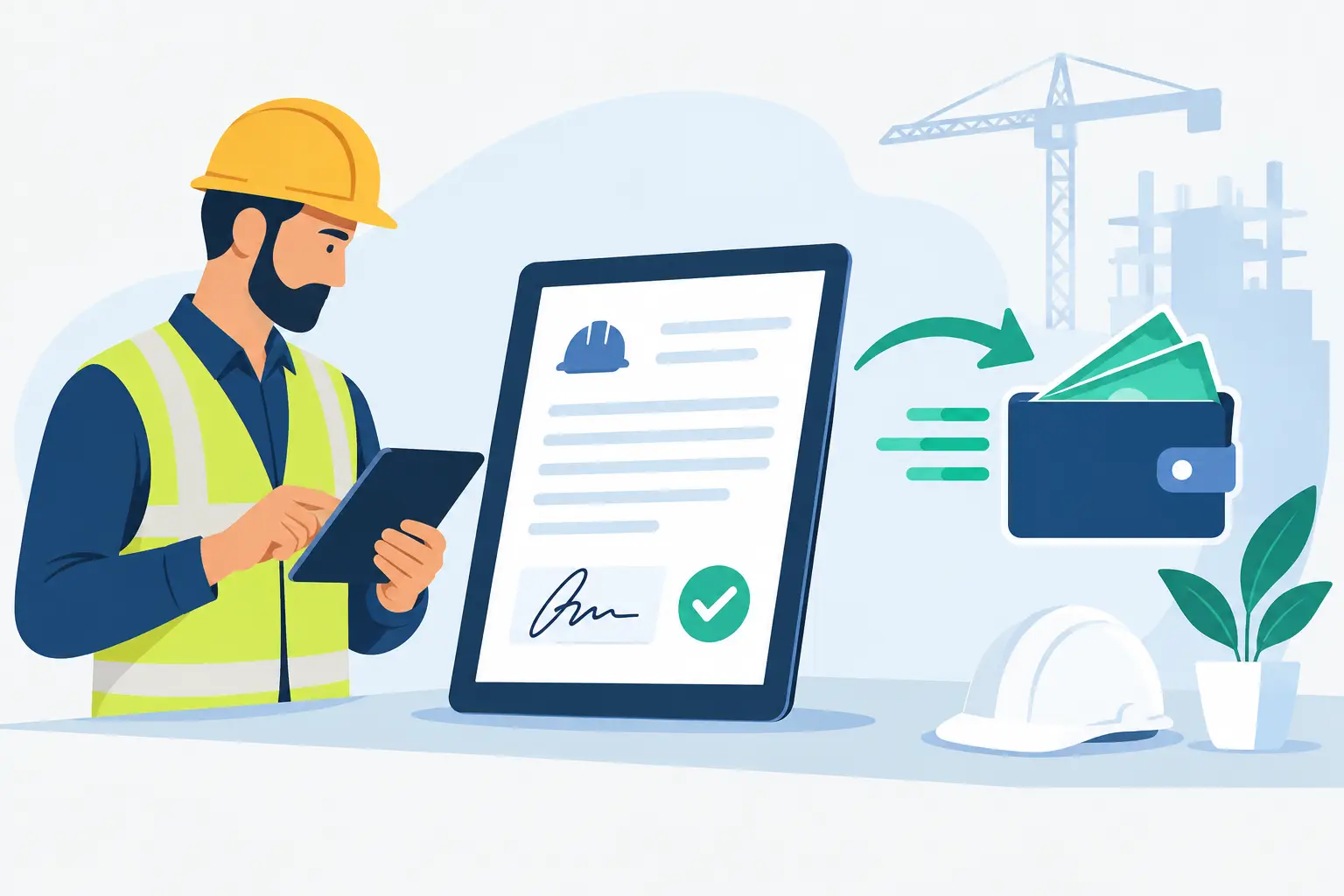

A missed payment is frustrating. A missed notice deadline or incomplete waiver can be much more expensive. This contractor document compliance guide gives you a practical system for keeping the records that support your right to get paid – before a dispute turns into a scramble for paperwork.
For contractors, subcontractors, and suppliers, compliance is not about creating a bigger office workload. It is about being able to prove what you agreed to, what you performed, what you billed, and what remains unpaid. The right documents also help you respond quickly when an owner, general contractor, lender, or attorney asks for backup.
Start Every Job With a Document File
Build a separate file for every project before materials arrive or crews start work. A folder can be digital, physical, or both, but it should be consistent across your business. If your team cannot find the contract, job address, customer contact, and latest invoice within a few minutes, the file needs a better system.
Use a clear job naming format, such as property address plus customer name and project number. Keep the original signed agreement in the folder, along with every change order, estimate, purchase order, and written approval. Verbal directions happen on active jobs, but a follow-up text or email confirming the scope, price, and schedule can prevent later arguments.
Your core project file should include the contract or subcontract, scope of work, payment terms, insurance and license records when required, permits, change orders, invoices, proof of delivery, daily reports, photos, and payment correspondence. You may not need every item on every project. A small repair job has different documentation needs than a commercial buildout. Still, the habit of documenting early is far easier than reconstructing a job after payment stops.
Know Which Documents Protect Payment Rights
Lien compliance is deadline-driven and state-specific. The forms and timing that apply to an Illinois subcontractor may not be the same as those for a contractor in another state. That is why copying a form from an old job without checking current requirements can create real risk.
Preliminary Notices and Notices to Owner
Many states require certain contractors, subcontractors, or suppliers to send preliminary notices to preserve lien rights. These notices generally identify the party furnishing labor or materials, the project, and the party that hired them. They are not an accusation and do not mean the job is headed for a dispute. They are routine payment-protection paperwork.
The key issue is timing. Some notices must be sent shortly after first furnishing labor or materials, not when an invoice becomes overdue. Put the first-work date or first-delivery date in your project file immediately. Then set a calendar reminder well before any applicable notice deadline.
Confirm who owns the property, who hired you, and whether there is a lender involved when the applicable rules require that information. A property legal search can help verify ownership details when the information provided at the start of a job is unclear or outdated.
Lien Waivers and Releases
Waivers are often exchanged with progress payments and final payments. They deserve a careful review because the wording matters. A conditional waiver generally becomes effective only when payment clears. An unconditional waiver may waive rights once signed, whether or not the check later creates a problem.
Match the waiver to the payment. Check the project name and address, the payment amount, the through date, and whether the document covers a progress payment or final payment. Do not sign a final waiver simply because the customer says it is needed to release funds if the payment amount does not cover the full balance you are waiving.
When notarization is required or requested, make sure the document is completed correctly before it is notarized. Notarization confirms the signer’s identity and signature. It does not fix incorrect job details, missing amounts, or a waiver that was signed too soon.
Claim of Lien Documents
A mechanics lien or construction lien is a formal claim against the property for unpaid work or materials. Deadlines for serving notices, recording a lien, and enforcing a lien can be strict. The calculation may depend on your role on the project, the type of property, the date of last work, and state law.
Treat lien preparation as a records exercise as much as a form exercise. You need accurate legal names, property information, contract details, dates, the unpaid amount, and a clear description of the labor or materials provided. Incomplete or inconsistent information can weaken a claim or delay the process.
Document preparation services can reduce administrative pressure, but they do not replace your responsibility to act on time. Unless recording assistance is specifically arranged, the party seeking the lien should confirm where and how the document must be recorded and keep proof of recording and service.
Use a Simple Deadline System
The most common compliance failure is not bad intent. It is a busy contractor assuming there will be time to handle paperwork later. There often is not.
For each project, track four dates from the start: contract date, first furnishing date, last furnishing date, and each invoice due date. Add the dates for required preliminary notices, demand letters, lien filing, and any enforcement deadline that applies to your situation. Use calendar alerts at least 30 days, 14 days, and 7 days before a critical deadline where the timeline allows.
Do not rely on one person’s memory. Assign responsibility to an office manager, owner, project administrator, or outside document support provider. If your company is small, a shared spreadsheet with one person accountable for weekly review is better than a complicated system nobody maintains.
Keep Proof, Not Just Copies
A completed form is only part of the record. You also need to show what happened with it. Save proof that notices were mailed, delivered, emailed when permitted, or otherwise served according to the applicable requirements. Keep certified mail receipts, tracking confirmations, delivery records, signed acknowledgments, and screenshots of relevant communications.
For invoices, retain the sent version, not only the draft in your accounting system. For materials, retain supplier invoices and delivery tickets. For labor, retain timesheets, work logs, or daily reports. For completed work, dated photos can be especially helpful when a customer later questions progress, quality, or scope.
Keep payment records just as carefully. Note check numbers, electronic transfer confirmations, partial payments, retainage, credits, and disputed amounts. This prevents a common problem: filing paperwork based on an old balance after a partial payment changed the amount due.
Avoid the Errors That Cost Contractors Time
A few mistakes show up repeatedly. The first is using the wrong legal name. “ABC Roofing” may be the company’s trade name, while the contract party is ABC Roofing Services LLC. The second is relying on an incorrect property address or legal description. The third is treating an owner, tenant, developer, and general contractor as if they are the same party.
Another issue is signing broad releases without matching them to the actual payment. If a waiver says final payment but you are still waiting on change-order money, retainage, or unpaid material charges, stop and confirm the terms. The right choice depends on the document language and the payment being offered.
Finally, do not wait for a collection problem to organize records. By the time a customer stops returning calls, deadlines may already be close. A clean file gives you options. A scattered file forces you to spend valuable time searching while the clock runs.
Make Compliance Part of Your Billing Routine
The easiest system is the one tied to work you already do. When you create an estimate, open the project folder. When the contract is signed, verify names and property information. When work begins, enter the first furnishing date. When you send an invoice, check whether a notice, waiver, or follow-up document is due.
At final billing, reconcile the full contract amount, approved changes, payments received, retainage, and amount still owed before issuing a final release. If you need help preparing a lien-related document, obtaining property information, or handling a notarized final waiver, First Choice Lien can provide practical document support with upfront pricing and a focus on fast turnaround.
Paperwork should not pull you away from running jobs. But the few minutes spent keeping a complete project file can protect weeks or months of hard-earned revenue. Set up the file before the first day of work, review deadlines every week, and address missing documents while the details are still fresh.