
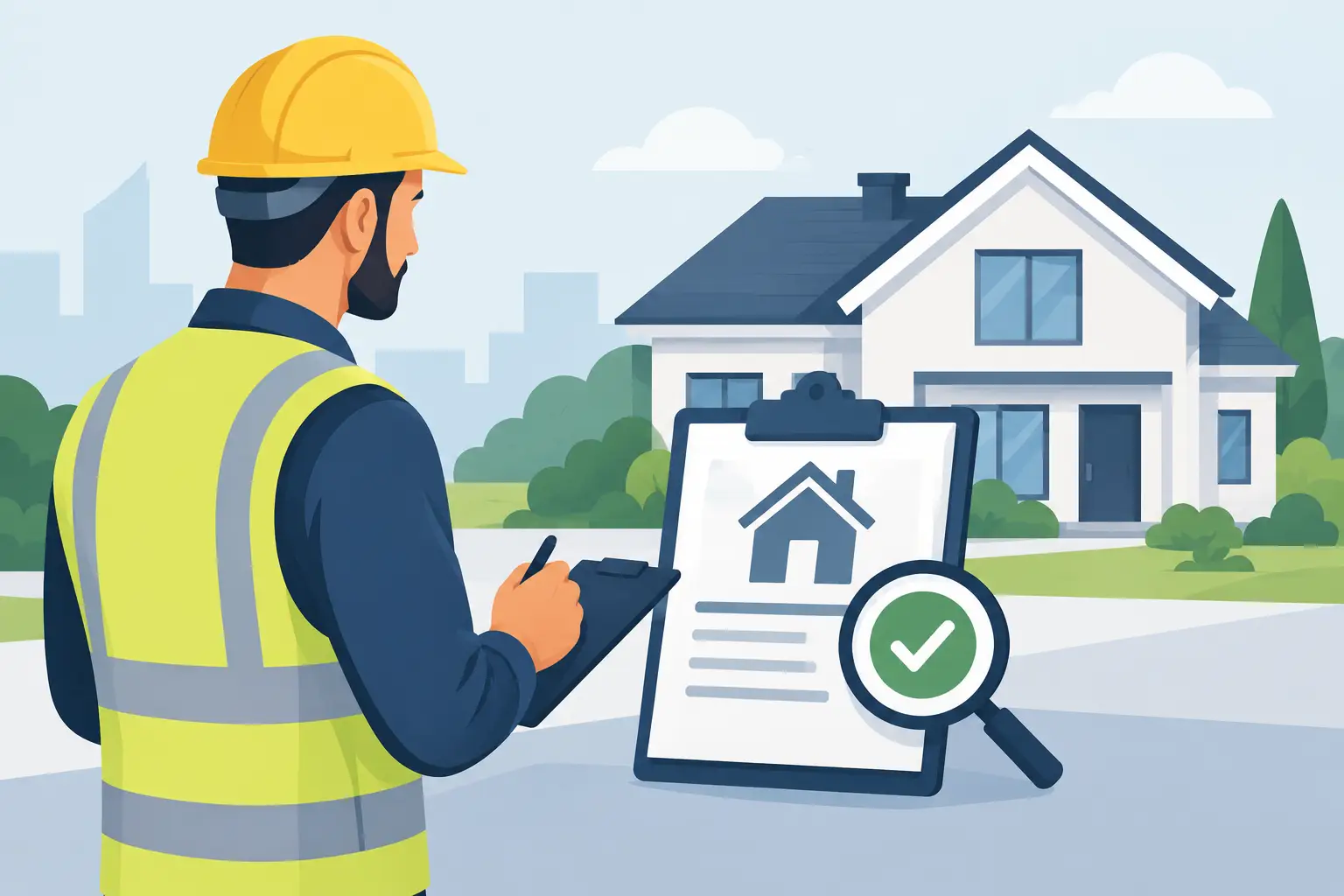
A missed payment is bad enough. Sending a preliminary notice, demand, or lien document to the wrong owner can make the problem harder to fix. This property ownership verification guide gives contractors a practical way to identify the correct party before deadlines start closing in.
The name on a proposal, building permit, or jobsite sign is not always the legal owner of the property. A tenant may be running the project. A developer may use a project-specific LLC. A trust may hold title. On commercial work, the company paying invoices may not own the parcel at all.
For lien-related paperwork, details matter. Confirming ownership early helps you prepare documents accurately, direct notices to the proper party, and avoid losing time on corrections when cash flow is already under pressure.
Why ownership verification matters before lien paperwork
Construction payment rights are controlled by state law, contract facts, deadlines, and the accuracy of the documents you send or record. Ownership research does not replace legal advice, but it is a critical administrative step before preparing a notice of intent, mechanics lien, lien waiver, or other payment-related document.
The legal owner is often the party whose property interest may be affected by a recorded lien. If your paperwork names an individual when title is actually held by an LLC, or lists a former owner after a recent sale, you may create avoidable issues. Depending on the state and document involved, an error may be correctable. In other situations, a deadline may make a correction expensive or impossible.
Ownership verification is especially useful when:
- The customer’s name does not match county property records.
- The project involves a commercial building, condominium, trust, estate, or new development.
- The owner sold, refinanced, or transferred the property during construction.
- You are close to a notice or lien filing deadline.
The goal is simple: identify the parcel, identify the current record owner, and make sure the names and addresses in your paperwork match reliable records as closely as possible.
Start with the exact project property
Before searching for an owner, make sure you are searching the right property. Write down the complete jobsite address, including unit number, suite, lot number, or building number where applicable. A street address alone can be misleading on a multi-parcel development, a large commercial center, or a new subdivision.
If you have a contract, proposal, purchase order, permit, or invoice, compare the address across all documents. Look for differences such as “Main Street” versus “Main St.,” a missing directional marker, or a mailing address used in place of the project address.
The next useful identifier is the parcel number, often called an assessor’s parcel number, PIN, APN, or property index number. Counties use these numbers to distinguish one parcel from another. They are particularly helpful when an owner has multiple adjacent lots or when the project address covers only part of a larger parcel.
For new construction, the street address may not yet appear in public records. In that case, the legal description, subdivision lot and block, parcel number, or permit information may point you to the correct land record.
Check sources in the right order
No single public record answers every question. County systems differ, and updates may not appear at the same time across assessor, tax, recorder, and court databases. Start with the most accessible records, then confirm the result with the source most relevant to title.
County assessor or property tax records
Assessor and tax records are usually the fastest place to begin. Search by address, parcel number, or owner name if the county allows it. These records may show the owner’s name, mailing address, parcel number, legal description, and property characteristics.
They are useful, but do not assume they are final proof of current ownership. Tax records can lag behind a recent transfer, and some counties display a taxpayer name that is different from the title holder. Treat this as a strong lead, not the only answer.
County recorder, clerk, or register of deeds
Recorded deeds are generally the better source for confirming who received title to the property. Search the county recorder, clerk, or register of deeds office for the latest deed affecting the parcel. Review the grantee name carefully. That is usually the party that received ownership under that deed.
Also check the recording date and document type. A quitclaim deed, warranty deed, trustee’s deed, or transfer-on-death deed may affect ownership differently. If the record is unclear, a property legal search can help organize the chain of documents so you are not making a guess from one incomplete entry.
Building permits and project documents
Permits can help connect the property, owner, general contractor, and scope of work. They are useful supporting records, especially when the project is new or the address is difficult to search. Still, permit applications may list an applicant, architect, tenant, or contractor rather than the title holder.
Use permits to confirm project details, not as your only ownership source.
Secretary of State business records
When title is held by an LLC, corporation, partnership, or other entity, search the applicable Secretary of State business database. This may confirm the entity’s legal name, active status, and registered agent. It can also help you catch small but meaningful naming differences, such as “ABC Development LLC” versus “ABC Development Group LLC.”
Do not substitute a member, manager, officer, or registered agent’s personal name for the entity name on title unless your state-specific requirements or legal guidance call for it. The owner may be the company, not the person behind it.
Match the owner name exactly
Once you locate the current deed or other reliable ownership record, copy the owner name carefully into your file. Small differences can matter. “Smith Family Trust” is not the same as “John Smith.” “Oak Ridge Holdings, LLC” is not necessarily the same entity as “Oakridge Holding Company.”
For lien notices and related documents, use the legal owner name shown in the relevant record and include the appropriate address required by your state’s form or notice rules. If there are multiple owners, do not leave one out simply because only one person signed the contract.
Pay close attention to these common ownership situations:
Trust-owned property. The deed may show a trustee, such as “Jane Doe, Trustee of the Doe Family Trust.” Use the full vested title as shown, rather than shortening it to the trust name or trustee’s personal name.
Married owners and joint owners. Title may be held by two individuals, spouses, joint tenants, or tenants in common. Your document may need to identify every vested owner.
Commercial entities. Use the complete entity name, including LLC, Inc., LP, or other designation. Confirm whether the company in your contract is the same company shown on title.
Condominiums and leased spaces. A customer may own one unit, lease a retail suite, or operate from a building owned by someone else. The ownership interest connected to your work can depend on the project and state law.
Watch for transfers, lenders, and layered project structures
A property can change hands while work is underway. When a project has been delayed, sold, refinanced, or transferred to a new development entity, run a fresh ownership check before sending a final notice or recording a lien. The owner at contract signing may not be the record owner when you need to act.
Recorded mortgages, deeds of trust, and other encumbrances are also worth reviewing. They do not change who owns the property, but they can reveal lenders, refinancing activity, and important project changes. Priority rules are state-specific, so do not assume a lien’s position based only on the order documents appear in a search.
On larger projects, there may be an owner, developer, construction manager, general contractor, tenant, and lender. Each may have a role in payment, but their roles are not interchangeable. Keep a clean file showing who contracted with you, who owns the property, and who received each notice.
Build a file that supports your next step
Ownership research is most useful when it is documented. Save the search date, parcel number, screenshots or copies of records, deed recording information, and the exact owner name used on your paperwork. If a dispute develops later, a clear file shows that you acted carefully and promptly.
A practical project file should also include your signed contract, change orders, invoices, delivery tickets, job photos, correspondence, and proof of notices sent. These records serve different purposes, but together they make it easier to prepare accurate lien documents if payment does not arrive.
If you need help obtaining property information or preparing lien-related paperwork, First Choice Lien provides contractor-focused property legal searches and document support with upfront pricing and fast turnaround. The service is designed to reduce administrative delays, not to provide legal advice or replace a lawyer when a dispute requires legal interpretation.
When a professional search is the better call
A quick county search may be enough for a straightforward residential job with a clear deed record. It may not be enough when the property has multiple parcels, several owners, an estate, a trust, a recent transfer, or an unclear commercial ownership structure.
Consider professional research when the amount owed is significant, the filing deadline is close, or public records point in different directions. The cost of confirming ownership is often far less than the cost of preparing and serving documents against the wrong party.
State rules vary widely. Notice recipients, timing, service methods, and lien form requirements can change from one state to another. If ownership or your lien rights are uncertain, seek advice from a qualified construction attorney in the state where the property is located.
Before you send the next notice or start lien preparation, take ten minutes to verify the parcel and the name on title. That small step can keep your paperwork moving in the right direction and give your payment claim a cleaner foundation.