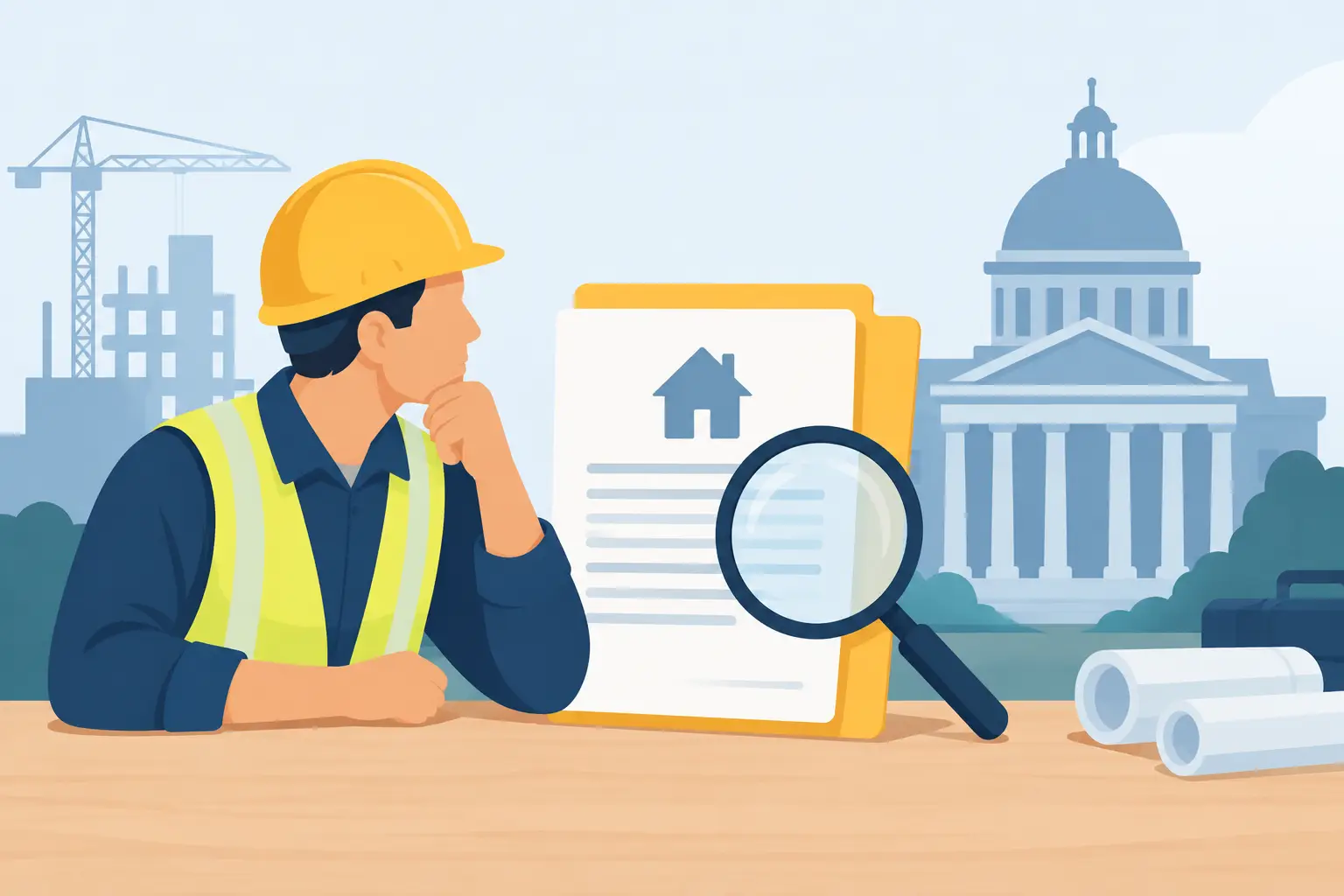

A recorded mechanics lien changes the conversation, but it does not automatically put money in your account. If you are asking what happens after lien filing, the short answer is that the property now carries a public payment claim. That can create real pressure on an owner, lender, or general contractor to resolve the balance, especially when a sale, refinance, draw request, or project closeout is approaching.
Your job after filing is to protect the claim, respond professionally to payment discussions, and track every deadline that follows. A lien is a powerful collection tool, but it only remains useful if you follow the rules that apply in the state where the project sits.
What Happens After Lien Filing Is Recorded
Once the lien is recorded with the appropriate county office, it becomes part of the property’s public record. A title company, buyer, lender, or owner conducting a property search may see it. In practical terms, the lien can complicate a sale, refinance, construction loan draw, or transfer until the claim is paid, released, bonded off, or otherwise resolved.
That visibility is often what brings a stalled payment issue back to the table. An owner may contact you directly, ask the general contractor for an explanation, or have a title company request a release before a transaction can move forward. Sometimes the first response is a serious settlement offer. Other times, the other side disputes the work, the amount claimed, or whether lien requirements were met.
Do not assume recording alone gives every required party notice. Many states require separate service or notice steps either before or after recording. The timing, delivery method, and required recipients can vary substantially. Missing a required notice can weaken an otherwise valid claim.
Secure Your Records Right Away
The day you file is not the day to put the project folder away. Keep a clean, complete record of the work and the payment history. If the matter turns into a dispute, you may need these documents to support the amount claimed and show that your work improved the property.
Your file should include four core categories of records:
- The signed contract, change orders, proposals, and scope of work
- Invoices, payment applications, aging statements, and proof of unpaid balances
- Job records, including photos, delivery tickets, daily logs, inspections, and messages
- The recorded lien, recording receipt, required notices, and proof of delivery
Save communications after the lien is filed as well. If an owner says payment will be made by a certain date, confirm the conversation in writing. If a general contractor claims an invoice is under review, ask what documentation is needed and when you can expect a decision. Clear records keep the discussion focused on facts instead of memory.
Keep working only with clear payment terms
Whether you continue working on the project depends on the contract, the job status, and the relationship. Continuing work may be necessary to meet your contractual obligations, but it can also increase your unpaid exposure. Before supplying more labor or materials, evaluate whether the payment problem is being resolved or simply pushed down the road.
If work continues, document it carefully. New work can affect notice dates, lien deadlines, and the amount at risk. Do not rely on a verbal promise that the lien will be handled later.
Expect Payment Talks, Not an Instant Check
After filing, the parties may negotiate a full payment, a partial payment, a payment plan, or a settlement. There is no single pattern. A financially stable owner facing a refinance may move quickly. A project with multiple subcontractor claims, defective-work allegations, or a bankrupt general contractor can take much longer.
A settlement can be a good business decision when it puts reliable money in your account and avoids expensive enforcement. But review what you are giving up. If you accept less than the full balance, make sure the written agreement clearly states the amount, payment dates, and when the lien will be released.
Be especially careful with waiver language. A lien waiver and a lien release are related documents, but they are not always interchangeable. A waiver generally gives up future lien rights for a stated payment period or amount. A release removes an already recorded lien. Do not sign an unconditional final waiver or lien release before the agreed funds have cleared, unless you intentionally accept that risk as part of a documented settlement.
A Lien Can Affect the Owner’s Next Move
Property owners do not always pay immediately because a lien is filed. Still, a recorded claim can interfere with decisions that require clean title. A lender may request resolution before funding a refinance. A buyer may require the lien to be released before closing. A title company may hold funds in escrow while the parties work out the dispute.
The owner may also choose to bond off the lien where state law allows. In that situation, the claim is transferred from the property to a bond or other security. The lien may be removed from the real estate record, but your underlying payment dispute does not necessarily disappear. You may need to pursue the claim against the bond under specific procedures and deadlines.
There can also be other claims against the property, including mortgages, tax liens, or liens from other contractors. Priority rules are state-specific and fact-specific. The date work began, the type of work performed, and whether proper preliminary notices were served can all matter. This is one reason accurate property information and timely paperwork matter from the start.
Filing Is Not the Same as Enforcing
This is the deadline contractors most often cannot afford to miss. Recording a lien preserves a claim for a limited period, but it does not last forever. If payment is not resolved, you may need to file a lawsuit to enforce or foreclose the lien before the statutory deadline expires.
That deadline varies by state and can be affected by the project type, the claimant’s role, notices, extensions, and other facts. In some states, the deadline may be measured in months. In others, it may be longer. Do not use a deadline from a job in one state to manage a project in another.
Lien enforcement is generally a court process. The court may determine whether the lien is valid, what amount is owed, who is responsible, and whether the property can be sold to satisfy the debt. Many disputes settle before that point, but you should not let settlement talks run out the clock. If enforcement may be necessary, speak with a construction attorney early enough to make an informed decision.
Watch for Requests to Release the Lien
When payment is made, the person paying will often request a release of lien. That is normal. The key is matching the release to the actual payment received.
For a full payoff, a final release may be appropriate after funds clear. For a partial payment, use language that accurately reflects the remaining balance and preserves rights for the unpaid amount when permitted. If the lien was filed in error, resolved through a settlement, or replaced by a bond, the release should reflect that situation correctly.
Some counties and transactions require notarization or have specific recording preferences. A properly prepared, notarized final release helps prevent a paid claim from lingering on title and becoming another administrative problem later. Keep a copy of every executed release and any recording confirmation.
Avoid the Mistakes That Cost Leverage
The most damaging post-filing mistake is waiting too long because you expect the other side to pay eventually. A lien has leverage because it is active, visible, and enforceable. Once a deadline passes, that leverage can drop sharply.
Another common problem is releasing the lien based on a promise, an uncleared check, or pressure from a closing party. A rushed release can leave you with an unsecured collection claim if payment fails. It is reasonable to be cooperative, but your documents must reflect the actual deal.
Finally, keep the payment issue professional. Avoid threats, public accusations, or emotional messages that can make settlement harder. State the amount due, provide supporting records when appropriate, set clear response dates, and preserve your rights without creating unnecessary conflict.
Take the Next Step Before the Deadline Does
After lien filing, the strongest position is a well-documented claim, a clear payment request, and a calendar that tracks every required notice and enforcement date. If you need help preparing lien-related paperwork, obtaining property information, or handling a notarized final release after payment, First Choice Lien provides contractor-focused administrative support with straightforward pricing and fast turnaround.
The best next move is usually not waiting for the dispute to fix itself. Confirm your deadlines, protect your records, and make every payment decision with your lien rights in mind.