
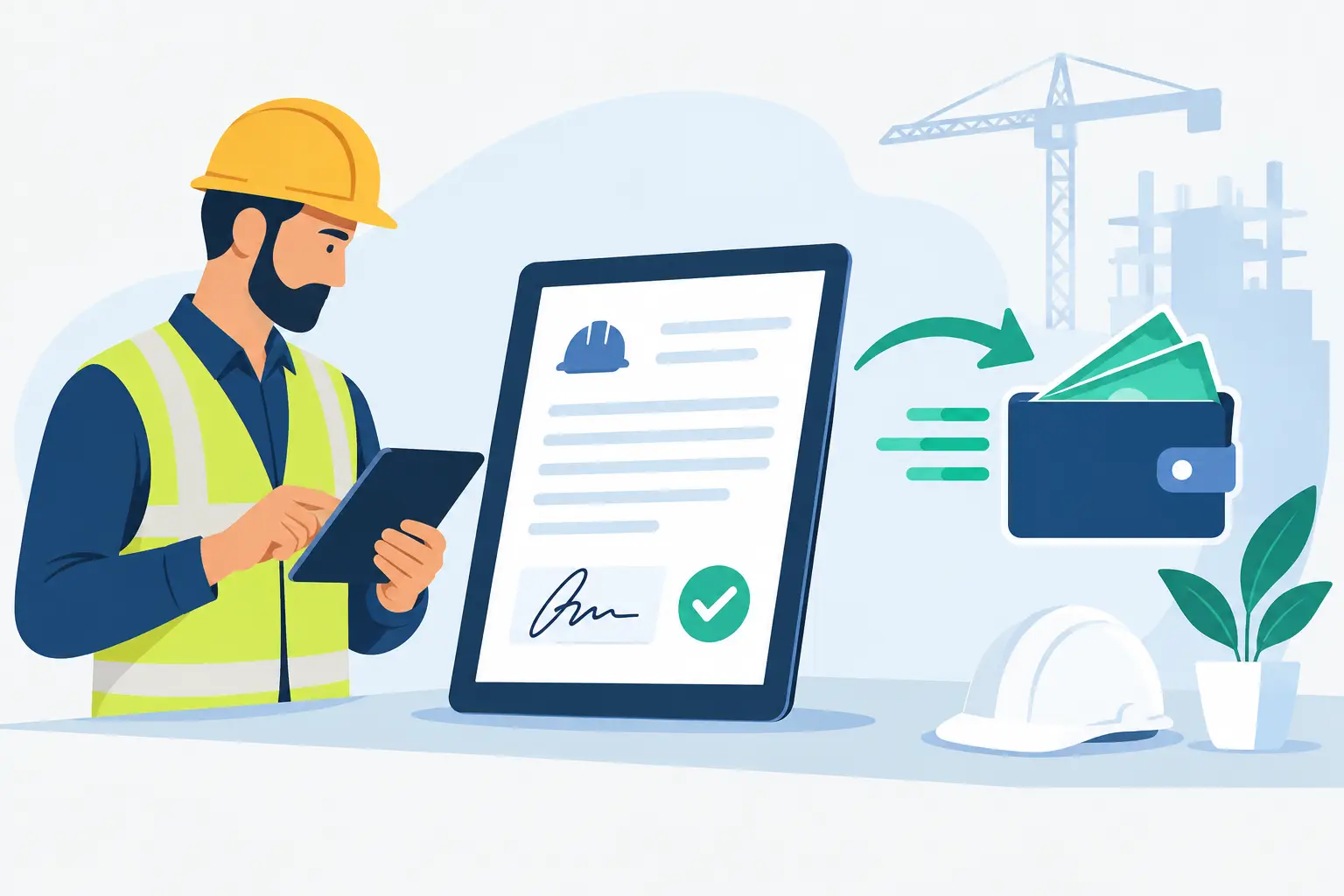
A payment finally arrives, but the check comes with a waiver that needs to be signed, returned, notarized, or sent through three different people before anyone releases the funds. For contractors, that delay is more than an annoyance. It can hold up payroll, materials, and the next job. Digital waivers help reduce that back-and-forth by making lien waiver documents easier to prepare, send, sign, and store.
The key is using the right waiver at the right point in the payment process. A fast electronic workflow is useful only when the document accurately reflects what has been paid, what work it covers, and what rights are being waived.
What Are Digital Waivers?
Digital waivers are lien waiver or payment release documents created, delivered, signed, and retained electronically. Instead of printing a form, waiting for ink signatures, scanning pages, and tracking down missing copies, parties can complete much of the process through a secure digital workflow.
On a construction project, a lien waiver is commonly requested when an owner, general contractor, lender, or property manager is preparing to release payment. The waiver provides written confirmation that the contractor or supplier is giving up certain lien rights to the extent stated in the document.
That last phrase matters. A waiver should not automatically mean you are giving up every unpaid amount connected to the project. Its effect depends on whether it is conditional or unconditional, whether it applies to a progress payment or final payment, and the language required by the applicable state law.
Why Contractors Use Digital Waivers
Construction paperwork moves through crowded inboxes, job trailers, accounting departments, and lender requirements. Digital processing helps keep a payment request from getting stuck because someone is waiting on a printed document.
For a contractor or subcontractor, the practical benefits are straightforward. Documents can be completed quickly, sent to the correct party, and saved in one place for later reference. A clear electronic record can also make it easier to confirm what was signed, when it was signed, and which payment it covered.
Digital waivers can be especially helpful when work is spread across several jobs or when the people approving payment are not in the same location. They reduce routine administrative work, but they do not eliminate the need to review the details. The project name, owner, property address, invoice amount, payment amount, and through-date should match the actual transaction.
The Four Waiver Types You Need to Recognize
Most payment waiver issues begin with a simple mistake: signing a final waiver for a partial payment, or signing an unconditional waiver before funds have cleared. Before using any electronic form, identify which document fits the situation.
Conditional Waiver for Progress Payment
This waiver is typically used when a partial or progress payment has been promised but has not yet been received or cleared. It generally becomes effective only after payment is actually made. For many contractors, it is the safer choice when submitting a draw request or waiting on a check.
Unconditional Waiver for Progress Payment
An unconditional progress waiver is generally used after a partial payment has been received and cleared. It releases lien rights through a stated date and amount, while preserving rights for later work and unpaid balances not covered by the waiver.
Conditional Waiver for Final Payment
This document is commonly used when the last payment is expected but has not yet cleared. Once the stated final payment is received, the waiver may release remaining lien rights for the project, subject to its terms and state requirements.
Unconditional Waiver for Final Payment
This is the document that deserves the most caution. It is generally used only after final payment has been received and confirmed. Signing an unconditional final waiver too early can create a serious collection problem if payment is delayed, disputed, or never arrives.
The labels are useful, but do not rely on the heading alone. Read the body of the waiver. Some forms contain broad release language covering claims beyond lien rights, such as change orders, retainage, extras, or disputed amounts. If the payment does not cover those items, the waiver should not suggest otherwise.
When Electronic Signatures Make Sense
In many situations, electronic signatures can be legally valid for construction documents. Federal and state electronic transaction laws generally recognize electronic signatures when the parties intend to sign and conduct business electronically. However, the correct approach depends on the document, the parties involved, and state-specific rules.
Some projects also have their own requirements. A lender, owner, title company, public agency, or general contractor may require a particular waiver form, a wet signature, notarization, or additional supporting documents. If a contract or payment administrator requires a specific process, follow it before assuming a standard digital signature will be accepted.
Notarization is another point to verify. Certain final releases or project documents may need notarization, and the availability of remote online notarization varies by state and circumstance. A digital document is not automatically a properly notarized document simply because it has an electronic signature.
A Practical Workflow for Digital Waivers
A reliable process does not need to be complicated. It needs to prevent the most expensive errors: using the wrong form, waiving too much, or losing track of what was submitted.
Start by matching the waiver to the payment status. If payment has not cleared, use a conditional waiver when appropriate. If payment has cleared, confirm whether the waiver is for a progress payment or final payment.
Next, verify the project information against your contract, invoice, and payment application. Check the legal property description or property address when required, the hiring party, the amount received, the payment period, and any remaining contract balance. Small inconsistencies can cause payment processing delays or create confusion later.
Before signing, look for language that goes beyond the payment at hand. If you are owed retainage, pending change orders, stored materials, or disputed extras, make sure the waiver does not unintentionally release those amounts. A conditional waiver tied to a specific payment can be useful, but it must clearly identify what it covers.
After signing, save a complete copy with the related invoice, proof of payment, and project correspondence. Name files consistently so they can be found quickly, such as project name, waiver type, payment date, and amount. If a dispute develops months later, organized records can be as valuable as the waiver itself.
Common Mistakes That Slow Down Payment
The speed of a digital process can make it easier to repeat an error quickly. Contractors should watch for four common issues:
- Signing an unconditional waiver before payment has cleared.
- Using a final waiver when the payment is only a progress draw.
- Leaving out the payment amount or through-date that defines the waiver’s scope.
- Sending a form that does not meet the project, lender, or state requirements.
Another problem is treating a waiver as a substitute for preserving lien rights. Waivers are only one part of a payment protection process. Depending on the state and project type, preliminary notices, notices of intent, lien deadlines, bond claim deadlines, and recording requirements may still apply. A digital workflow does not extend a deadline.
State Rules Still Control the Document
There is no single lien waiver form that works perfectly for every project in the United States. Some states prescribe statutory forms or specific notice language. Others allow more flexibility but still impose rules on enforceability. Public projects, private projects, residential work, commercial work, and federally funded projects can also carry different requirements.
Illinois contractors, for example, should pay close attention to the Illinois mechanics lien process and the specific role of sworn statements, contractor affidavits, and waiver language on a project. In other states, preliminary notice rules may be the first critical step long before a waiver is requested.
If the amount is significant, the release language is unusually broad, or payment is disputed, consider getting legal guidance before signing. Document preparation support can make the administrative side faster, but legal advice is appropriate when the terms or rights at stake are unclear.
Make the Waiver Process Work for Your Cash Flow
Digital waivers are most effective when they are part of a consistent billing routine. Send accurate invoices on time, know which waiver will be needed for each draw, and avoid waiting until the payment deadline to gather documents. When the payment request arrives, you should be ready to provide a clear waiver that matches the facts.
Fast paperwork helps, but accuracy protects the payment you worked for. Treat every waiver as a business record tied to a specific amount and stage of work, and you can move payment forward without giving up more than the transaction requires.