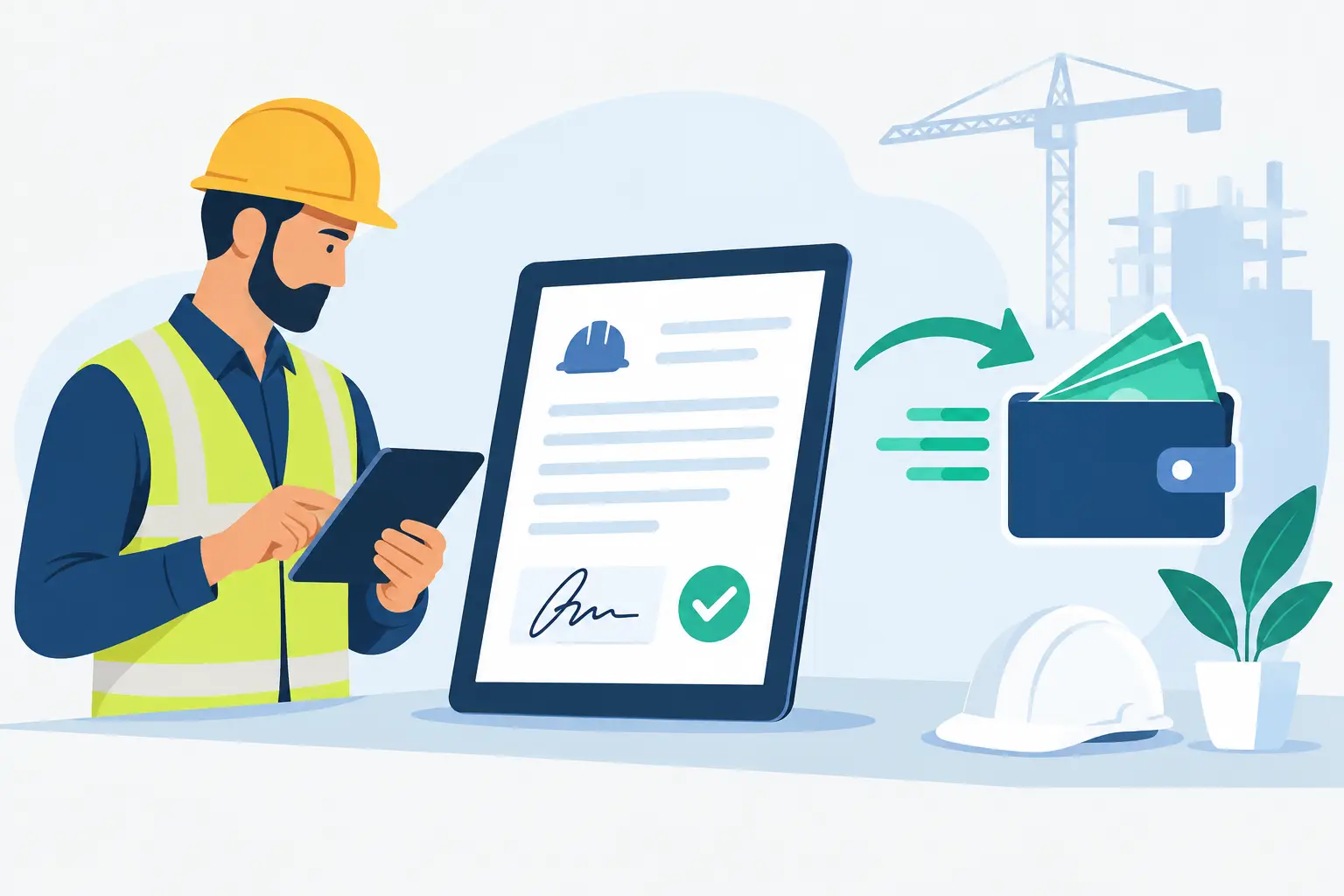

Miss the notice deadline on a California job, and your leverage can disappear before the payment problem even starts. That is why the California preliminary notice form matters so much. For contractors, subcontractors, suppliers, and labor providers, this document is not busywork. It is one of the first steps in protecting lien rights and keeping collection options open if a project goes sideways.
What the California preliminary notice form does
A California preliminary notice form tells the property owner, the general contractor, and the construction lender, if there is one, that you are furnishing labor, materials, equipment, or services to a project. It is a formal heads-up. You are not accusing anyone of nonpayment. You are putting the required parties on notice that you are part of the job and may have lien rights if you are not paid.
That distinction matters. A lot of contractors avoid sending notices because they think it will create tension with the GC or owner. In practice, the opposite is often true. On well-run jobs, preliminary notices are routine. They help owners track who is on site and help everyone avoid surprises later.
In California, this notice is often called a 20-day preliminary notice because timing is tied to a 20-day rule. If you send it late, that does not always mean you lose everything, but it can shrink the amount you are able to protect. That is where costly mistakes happen.
Who should send a California preliminary notice form
If you are not dealing directly with the property owner, you should take the notice requirement seriously. Subcontractors, material suppliers, equipment lessors, and many lower-tier parties commonly send a California preliminary notice form to preserve their rights. Prime contractors may also have notice obligations in some situations, especially on lender-involved projects or where statutory rules call for it.
The safest mindset is simple. If your payment rights depend on statutory compliance, do not assume your role is exempt just because you have a signed contract or a good relationship with the customer. California construction law is detail-driven. A strong claim can still be weakened by a missed step.
It also depends on the type of project. Private work, public work, tenant improvements, and owner-occupied residential jobs can raise different notice questions. The core idea stays the same, but the exact requirement can change based on who hired you and what kind of property is involved.
Why contractors get tripped up
Most notice problems are not caused by refusal. They are caused by delay and bad information. Someone starts work before the contract paperwork is fully organized. The project address is incomplete. The legal owner is not who everyone assumed it was. Or the lender information is missing and no one follows up.
Those are administrative problems, but they can have legal consequences. That is why many contractors either use a reliable form source or outsource document prep altogether. Speed matters, but accuracy matters just as much.
When to send the California preliminary notice form
The key issue is timing. In general, the notice should be served within 20 days of first furnishing labor, services, equipment, or materials to the project. If you send it within that window, you usually preserve rights from the start of your work.
If you send it after the 20-day period, California law may still allow the notice to be effective, but typically only for work or materials provided in the 20 days before service and after. That means earlier unpaid amounts may fall outside your protection. For a contractor already carrying labor and material costs, that can be a painful gap.
This is why waiting until there is a payment issue is a mistake. By then, valuable time may already be gone. The better approach is to treat notice service as part of project setup, right along with contract review, job costing, and insurance paperwork.
What information belongs on the form
A California preliminary notice form needs to identify the parties and the work clearly enough to meet the statutory purpose. Exact formatting matters, and so does complete project information. Small errors do not always destroy a notice, but missing or misleading details can create disputes you do not need.
Most forms include the name and address of the owner or reputed owner, the direct contractor, the construction lender if known, the party giving notice, a general description of the labor or materials furnished, the project location, and an estimated total price. The form also includes statutory warning language required under California law.
That estimated value section causes a lot of hesitation. Contractors worry about putting down the wrong number. The practical answer is to use a good-faith estimate based on the contract or expected scope at the time. If the job grows, that does not automatically invalidate the original notice, but major changes may call for a closer look at whether updated documentation makes sense.
Service matters as much as the form itself
Using the right form is only half the job. The notice must also be served properly on the right parties. If service is defective, a perfectly completed document can still fail to do its job.
California has service rules that should be followed carefully, including the method of mailing and proof of service. This is one area where contractors often assume ordinary business mailing is enough. Sometimes it is not. If you are relying on a notice to preserve lien rights, you want a clean record showing when it was sent, to whom, and by what method.
Common mistakes that can cost you money
The most common mistake is sending the notice too late. The second is sending it to the wrong party or using incomplete ownership information. The third is treating the form like a generic template that can be copied from one project to the next without checking the facts.
California projects often involve layered ownership and financing structures. A tenant may hire the work, but the fee owner may still matter. A lender may be involved even if no one mentioned it at the kickoff meeting. A residential remodel may have different practical concerns than a commercial tenant buildout. The form itself is standard in purpose, but the project facts still need to be verified.
Another mistake is assuming a preliminary notice guarantees payment. It does not. It preserves rights. That is a big advantage, but it is not the same as a paid invoice. You still need to manage billing, change orders, and collection follow-up. Think of the notice as protective groundwork, not a complete payment strategy.
Should you handle it yourself or use a service?
That depends on your volume, your office setup, and how confident you are in your process. If you send notices regularly and have someone who can verify project data, track deadlines, and document service correctly, handling it in-house may be workable.
But for many small contractors, the problem is not understanding that a notice is required. The problem is getting it done on time while also running crews, ordering materials, chasing approvals, and keeping cash flow moving. In those cases, outsourcing can be the cheaper option when you compare it to the cost of a missed deadline or a defective notice.
A practical service should make the process simple, not more complicated. You want clear pricing, fast turnaround, and support that focuses on document preparation and compliance steps rather than vague legal jargon. That is the reason many contractors use companies like First Choice Lien when paperwork starts eating into job time.
How to make the California preliminary notice form part of your routine
The best contractors do not wait for a payment dispute to think about lien rights. They build notice handling into the front end of every qualifying project. That can be as simple as using a job intake checklist with space for owner information, hiring party details, project address, lender details, first date of work, and estimated contract amount.
If any of that information is missing, flag it early. Do not let the file sit because one detail is unclear. A quick property search or document prep step at the start is usually easier than trying to repair a notice problem after invoices age out.
For recurring customers, routine matters even more. Familiar clients can create a false sense of safety. Many payment disputes come from jobs that looked stable at the beginning. The notice is not a sign of distrust. It is a standard business practice that protects your company if ownership, financing, or payment flow changes later.
A document that gives you options
The California preliminary notice form is not the most exciting part of a job, but it may be one of the most valuable. It helps preserve leverage before there is a problem, and that leverage matters when money gets tight. If a project is worth staffing, scheduling, and funding, it is worth getting the notice step right.
The contractors who stay protected are usually not doing anything fancy. They are just consistent. They treat deadlines seriously, verify the project details, and do the paperwork while the job still looks healthy. That one habit can save a lot of stress when payment slows down.