A payment finally hits your account, and someone sends over a waiver to sign right away. That is where conditional vs unconditional waiver mistakes happen. If you sign the wrong form at the wrong time, you can give up rights before the money is fully secured.
For contractors, subs, and suppliers, this is not small paperwork. A lien waiver can directly affect whether you still have leverage if a payment falls through, clears late, or turns out to be disputed. The difference between these two forms is simple on paper, but costly in real jobs.
Conditional vs Unconditional Waiver: The Core Difference
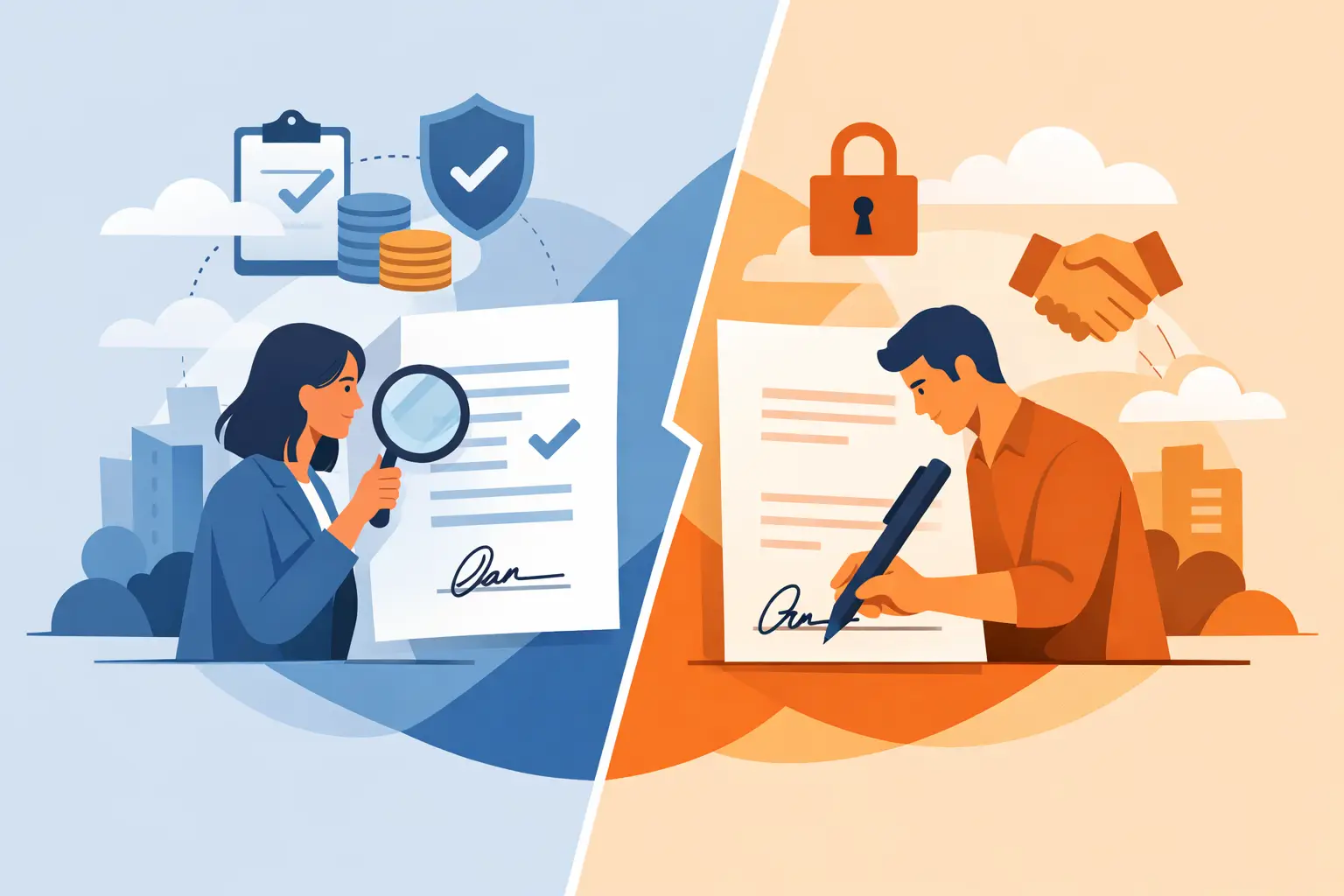
The short version is this: a conditional waiver becomes effective only if payment actually happens. An unconditional waiver is effective immediately, regardless of whether the payment later clears, gets reversed, or turns into a problem.
That one difference matters a lot. A conditional waiver protects you until the payment condition is met. An unconditional waiver gives up rights now. If you are still waiting on a check to clear, an ACH to settle, or a joint check issue to be worked out, signing an unconditional form too early can leave you exposed.
This is why contractors should never treat lien waivers like routine admin forms. They are tied to payment rights, and timing matters just as much as the wording.
When a Conditional Waiver Makes Sense
A conditional waiver is usually the safer choice when payment is expected but not fully confirmed. That can include progress payments, final payments, mailed checks, or situations where funds are promised but not yet in hand.
In practical terms, if someone says, “Sign this and we will release the check,” a conditional waiver is often the better fit. It says your waiver is tied to actual receipt of payment. If the check bounces or never arrives, your rights are generally not waived under that condition.
This is especially important on busy projects where accounting delays happen, retainage gets confused with current billing, or a payment is split between multiple invoices. A conditional form gives you room to protect yourself while still moving the payment process forward.
That does not mean it solves every problem. If the form is poorly written, tied to the wrong amount, or applied to the wrong billing period, you can still create confusion. The safer form still has to be completed correctly.
Common Uses for Conditional Waivers
Most contractors use conditional waivers for progress draws and for final payment that has been promised but not fully settled. They are also useful when the payer insists on receiving a signed waiver before releasing funds.
That said, state rules can affect the exact form and wording required. Some states are stricter than others, and using the wrong format can create its own risk. If you work across multiple states, it is smart to slow down and confirm you are not using one state’s habit on another state’s job.
When an Unconditional Waiver Is Appropriate
An unconditional waiver is generally best used only after payment is actually received and confirmed. That usually means the check has cleared, the wire is complete, or the funds are no longer in question.
At that point, the form can do what it is supposed to do – acknowledge that payment has been made and that you are waiving lien rights to the extent covered by that payment. Used correctly, it helps close out payment documentation and reduces back-and-forth with owners, lenders, and general contractors.
Used too early, it can create a real collection problem. If you sign an unconditional waiver before funds are secure, and then the payment fails, you may have waived your right to claim against that amount anyway. That is the exact scenario contractors want to avoid.
Why People Sign Unconditional Waivers Too Soon
Most early-signing mistakes are not caused by recklessness. They happen because crews are busy, office staff are buried, and someone wants the file closed today. A waiver gets emailed over with a request to sign “so accounting can process payment,” and the form is treated like a receipt instead of a rights document.
Sometimes the pressure comes from a GC or owner trying to keep draws moving. Sometimes it comes from your own team wanting to avoid delay. Either way, speed should not outrun verification.
Progress Waivers vs Final Waivers
The conditional vs unconditional waiver issue also overlaps with whether the form is for a progress payment or a final payment. Those are not the same thing.
A progress waiver applies to a specific portion of work or a particular payment period. A final waiver usually signals that all amounts due on the project, or all amounts due from your scope, have been paid and released. Signing a final waiver too early can be even more damaging because it may affect all remaining rights, not just one invoice.
Read the form for scope, date range, and payment amount. If the waiver says final, but you are still waiting on change orders, retainage, or disputed extras, that should raise a flag immediately.
The Real Risk in Conditional vs Unconditional Waiver Forms
The biggest risk is not usually the label alone. It is the mismatch between the label, the payment status, and the actual job record.
For example, you might receive partial payment for one invoice but be sent a waiver that appears to cover all labor and materials through a broader date. Or you might be paid for base contract work while unresolved change order amounts are still open. If you sign without checking the details, you can waive more than intended.
Another issue is assuming every waiver form means the same thing from project to project. They do not. Some forms are state-specific. Some are custom forms drafted by owners or general contractors. Some use broad language that goes beyond a normal payment acknowledgment.
That is why the safest habit is to match the waiver to the exact payment being made. Confirm the amount, confirm whether it is progress or final, confirm whether funds are actually received, and confirm that the wording does not release unrelated claims.
A Simple Way to Decide Which Form to Use
If the money is promised but not fully confirmed, start with conditional. If the money is in and cleared, unconditional may be appropriate.
That is the practical rule most contractors can use day to day. It is not perfect for every situation, because state law and project documents still matter, but it is a strong baseline. The more uncertainty there is around payment, the less reason there is to sign an unconditional waiver.
It also helps to ask one plain question before signing: “If this payment fails tomorrow, do I still want my lien rights?” If the answer is yes, an unconditional waiver is probably premature.
Documentation Matters More Than People Think
Good waiver handling depends on clean records. Keep copies of the signed waiver, the invoice it relates to, proof of payment, and any notes showing whether the payment was partial, final, or disputed.
This matters when a project gets messy months later. If there is disagreement over what was paid, what was waived, or what dates were covered, your records become your backup. Without them, even a form you thought was limited can turn into a dispute over scope.
For small contractors especially, the risk is often operational, not legal theory. One rushed signature can create a collection gap at the exact moment cash flow is tight. That is why many companies use outside support for lien paperwork and waiver prep when the volume picks up or the forms start getting inconsistent.
Don’t Let the Form Move Faster Than the Payment
On construction jobs, paperwork often shows up with urgency attached. Sign now, send now, close now. But lien waivers should follow payment, not chase it.
If you remember only one thing about conditional vs unconditional waiver forms, make it this: conditional is for expected payment, unconditional is for confirmed payment. That one distinction can prevent a lot of avoidable trouble.
And if a form looks broader than the check you are receiving, or the timing feels off, pause before you sign. A few extra minutes on the document is a lot cheaper than losing your leverage after the work is already done.